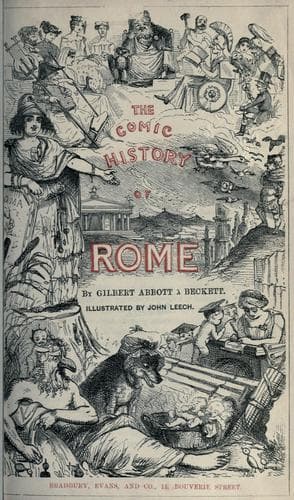
The Comic History of RomeÀ Beckett, Gilbert Abbott
History
The Comic History of Rome
À Beckett, Gilbert Abbott
Rome -- History -- Humor; Wit and humor, Pictorial
Reports were soon afterwards spread, that the man who had left the city
as a contemptible runaway, was about to return to it in the more
formidable character of a robber and a murderer. One night when the
people had gone to bed, many of them heard in their sleep the trampling
of horses, which seemed to come like a tremendous nightmare over the
city. Presently a shout arose, which beat upon the drum of every ear
like a call to battle. The Consuls sprang out of bed, and throwing about
them the first substitute for a toga that the bedclothes presented,
they made at once for the walls of the city. The plebeians, when called
upon, refused to serve; and the Consuls, feeling how weak they were in
going to the wall alone, made the usual promises, which the people, as
usual, were induced to discount, at a great personal sacrifice.
Proceeding to the Capitol, they found it in the possession of a large
band of exiles and runaway slaves, who would have been glad to run away
a second time, had escape been possible. Many fell, and were felled to
the earth, on both sides, while P. Valerius after putting several to the
sword, had the sword put to him in a most uncomfortable manner.
The exiles took nothing by their expedition as far as the attack was
concerned; but many of them owed something to the expedition with which
they fled from the contest. After this battle, all traces of Kæso
Quinctius are lost; but whether he fell in the fray, or whether the
thread of his existence was frayed out in some other way, is a mystery
we have no means of unravelling.
Appius Claudius was now called upon, as the surviving partner of P.
Valerius, to redeem the pledge given by the latter; but Appius, with a
chicanery worthy of Chancery in its best, or rather in its worst days,
pleaded the death of his colleague as a bar to the suit, declaring that
both consuls must be joined in it, though he knew all the while that a
bill of revivor for the purpose of including the deceased consul was
quite impossible. During these unhappy differences between the two
orders, many of the leading plebeians were murdered at the instigation
of the patricians, who, however, were rapidly cutting their own throats;
for violence, while it thinned the body, added to the stoutness of heart
of the popular party. The tribunes were increased in number from five to
ten; and, somewhat later, a still higher point was gained for the
plebeians by limiting to a couple of sheep and thirty beeves the fines
to which they were liable. These exactions were, however, enforced with
such rigour that the tenderest lamb was allowed no quarter if a fine had
been incurred, and the smallest stake in the country--if the stake
happened to be beef--was seized without remorse if the owner had become
subject to a penalty.
Public-domain text, read in full here on John Shaqi.
Reviews
Reviews
No reviews yet
Be the first to share your thoughts on this work.
Elsewhere in the archive
Join the Discussion
Join the discussion
Sign in to leave a comment or review.
Sign InorCreate an account