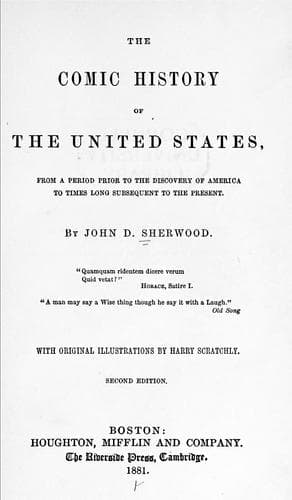
The comic history of the United States, from a period prior to the discovery of America to times long subsequent to the presentSherwood, John D.
History
The comic history of the United States, from a period prior to the discovery of America to times long subsequent to the present
Sherwood, John D.
United States -- History -- Humor
Between the death of Washington and the middle of the nineteenth century
grew up a second and numerous generation of great men. Although nearer
to us in time, they are not so near to our affections as the elder set.
Most of this younger race some of us have seen; and they have thus lost
a certain historic grandeur and magnified proportion, always lent by
hazy distance to far-off objects. Most of them have been the subjects of
newspaper attack, of conversational controversy, of party assault and
defence equally damaging, and so have become doubtfully, perhaps
disagreeably, familiar. Many of them have been brought into the
jurisdiction of our partisan praises and censures for offences against
our political principles or passing tastes. Some have been despatched
thence with Arizona justice, others by New York equity. Now we have
reluctantly dismissed some with Scotch verdicts of “not proven,” with
lurking suspicions more injurious than a positive Saxon condemnation of
“guilty”; and anon, we have banished others to the penal settlements of
our criminal domain.
Ingenious biographers, taking up characters hitherto surrendered to the
public executioner, asking for reviews of judgments alleged to be hasty,
and setting forth, in an attractive way, features which even criminals
share with the unindicted and facts unstained, perhaps, with the one
great crime which slew their reputations, have recently argued for new
trials with a convincing sophistry that few can resist after dinner, and
which captivates by its audacious novelty. All of us have discovered
what Tacitus long ago so tersely expressed,—our readiness to listen to
scandal, and our proneness to praise ourselves for our leniency to the
maligned:—
“Livor et obtrectatio pronis auribus accipiuntur; quippe adulationi
fœdum crimen servitutis, malignitati falsa species libertatis inest.”
If the puzzled are generally unsafe, the censorious are usually unfair
judges.
Members of the same family, too, are among each other as likely to do
injustice to a fellow-member by their jealous criticisms, as they are
apt before strangers to make themselves and their fellows ridiculous by
undiscriminating praise.
Public-domain text, read in full here on John Shaqi.
Reviews
Reviews
No reviews yet
Be the first to share your thoughts on this work.
Elsewhere in the archive
Join the Discussion
Join the discussion
Sign in to leave a comment or review.
Sign InorCreate an account