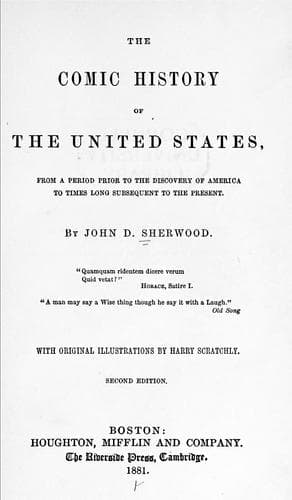
The comic history of the United States, from a period prior to the discovery of America to times long subsequent to the presentSherwood, John D.
History
The comic history of the United States, from a period prior to the discovery of America to times long subsequent to the present
Sherwood, John D.
United States -- History -- Humor
The cotton veil was becoming very soiled and flecked. November brought
out a variety of colors in American affairs, some light with yellow
hues, others as dark as the gusty season loves to whirl over a surface
ever freezing and thawing. General Scott retired from the chief command
of the army, to which General McClellan succeeded; the lean Davis was
made high-priest for six years to the Southern fetich, and Mason and
Slidell, Confederate commissioners, hurriedly shunning Mr. Welles and
his cruisers, were captured by Captain Wilkes off the Trent. They were
of course promptly spied by the large, vigilant English telescope,
which, in its rapid shifting for the occasion, read English
international law backwards, and spelled out our duty from our own
precedents. The alacrity with which their surrender was demanded showed
that the still anxious young lady had survived the alarm, caused by the
unwilling kiss six months before, and was desirous to escape, in
precisely the same way, any further impertinences.
John C. Breckenridge now climbed down to grasp the depraved prize he had
at last so well earned. Elected a Senator of the United States at the
close of the Vice-Presidency in the preceding March, he readily took a
voluntary oath to support the Constitution of an undivided land; played
the spy upon the efforts of its government to thwart the attempts to
dissever it; and at the close of the session, unable longer to profit by
his office and oath, took a brigadier’s commission and a new oath
against a country which had loaded his family and himself with its
highest honors. Once the cherished type of a chivalrous gentleman, he
engrafted upon the abused name of chivalry definitions more reproachful
than those which spring from the addled eccentricities of Don Quixote;
his old friends, if any such survive, must long have desired to feel
that he had only lost an arm in a service which, undistinguished by any
advantage brought to it by a man who had deserted everything for it,
sunk the remains of a character once high, and an intellect once
brilliant, to a depth compared with which history refuses an example.
Others may plead some excuse, more or less admissible, for their armed
heresies: Davis, that his was a logical sequence to his lifelong
convictions of State supremacy; Toombs, Cobb, Stephens, and others, that
their States dragged them out; Floyd, the necessity of putting money in
his purse; Wise, the loss of a guiding intelligence. But to not one of
these can John C. Breckenridge point to mitigate the just severities of
that moral verdict which, in cases of such cumulated guilt, can only
appease the general uneasiness at the exhibition of depravity so
fathomless, by the most exemplary damages. Looking into the dreadful
chasms, down which his example cast so many others; the maimed cripples,
the hollow-eyed widows, Justice slain by stabs in the back, exiles from
poor homes smitten by the bludgeons of secret agents, even humorous
Public-domain text, read in full here on John Shaqi.
Reviews
Reviews
No reviews yet
Be the first to share your thoughts on this work.
Elsewhere in the archive
Join the Discussion
Join the discussion
Sign in to leave a comment or review.
Sign InorCreate an account