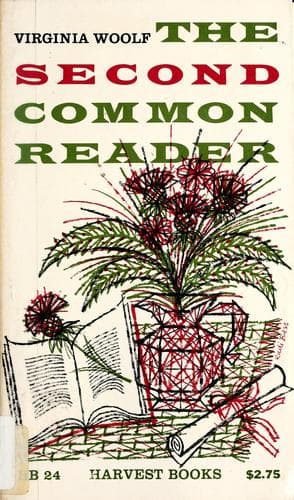
English literature -- History and criticism; Literature, Modern -- History and criticism
But, lord Christ! When that it remembreth me
Up-on my yowthe, and on my Iolitee,
It tikleth me aboute myn herte rote.
Unto this day it doth myn herte bote
That I have had my world as in my tyme.
The sound of that old woman’s voice is still.
But there is another and more important reason for the surprising
brightness, the still effective merriment of the _Canterbury Tales_.
Chaucer was a poet; but he never flinched from the life that was being
lived at the moment before his eyes. A farmyard, with its straw, its
dung, its cocks and its hens is not (we have come to think) a poetic
subject; poets seem either to rule out the farmyard entirely or to
require that it shall be a farmyard in Thessaly and its pigs of
mythological origin. But Chaucer says outright:
Three large sowes hadde she, and namo,
Three kyn, and eek a sheep that highte Malle;
or again,
A yard she hadde, enclosed al aboute
With stikkes, and a drye ditch with-oute.
He is unabashed and unafraid. He will always get close up to his
object—an old man’s chin—
With thikke bristles of his berde unsofte,
Lyk to the skin of houndfish, sharp as brere;
or an old man’s neck—
The slakke skin aboute his nekke shaketh
Whyl that he sang;
and he will tell you what his characters wore, how they looked, what
they ate and drank, as if poetry could handle the common facts of this
very moment of Tuesday, the sixteenth day of April, 1387, without
dirtying her hands. If he withdraws to the time of the Greeks or the
Romans, it is only that his story leads him there. He has no desire to
wrap himself round in antiquity, to take refuge in age, or to shirk the
associations of common grocer’s English.
Therefore when we say that we know the end of the journey, it is hard to
quote the particular lines from which we take our knowledge. He fixed
his eyes upon the road before him, not upon the world to come. He was
little given to abstract contemplation. He deprecated, with peculiar
archness, any competition with the scholars and divines:
The answere of this I lete to divynis,
But wel I woot, that in this world grey pyne is.
What is this world? What asketh men to have?
Now with his love, now in the colde grave
Allone, withouten any companye,
he asks, or ponders
O cruel goddes, that governe
This world with binding of your worde eterne,
And wryten in the table of athamaunt
Your parlement, and your eterne graunt,
What is mankinde more un-to yow holde
Than is the sheepe, that rouketh in the folde?
Public-domain text, read in full here on John Shaqi.
Reviews
Reviews
No reviews yet
Be the first to share your thoughts on this work.
Join the Discussion
Join the discussion
Sign in to leave a comment or review.
Sign InorCreate an account