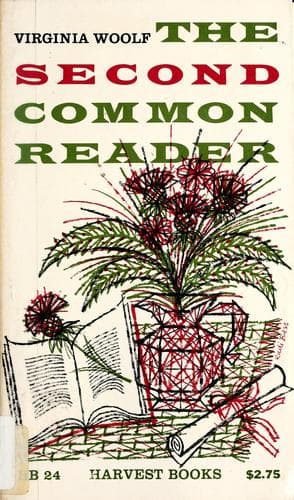
English literature -- History and criticism; Literature, Modern -- History and criticism
The pilgrims of course were liars, as people whose eyes have just been
opened by a piece of the true Cross have every right to be; but their
news, none the less, was welcome. The Pastons had risen in the world.
People said even that they had been bondmen not so very long ago. At any
rate, men still living could remember John’s grandfather Clement tilling
his own land, a hard-working peasant; and William, Clement’s son,
becoming a judge and buying land; and John, William’s son, marrying well
and buying more land and quite lately inheriting the vast new castle at
Caister, and all Sir John’s lands in Norfolk and Suffolk. People said
that he had forged the old knight’s will. What wonder, then, that he
lacked a tombstone? But, if we consider the character of Sir John
Paston, John’s eldest son, and his upbringing and his surroundings, and
the relations between himself and his father as the family letters
reveal them, we shall see how difficult it was, and how likely to be
neglected—this business of making his father’s tombstone.
For let us imagine, in the most desolate part of England known to us at
the present moment, a raw, new-built house, without telephone, bathroom,
or drains, arm-chairs or newspapers, and one shelf perhaps of books,
unwieldy to hold, expensive to come by. The windows look out upon a few
cultivated fields and a dozen hovels, and beyond them there is the sea
on one side, on the other a vast fen. A single road crosses the fen, but
there is a hole in it, which, one of the farm hands reports, is big
enough to swallow a carriage. And, the man adds, Tom Topcroft, the mad
bricklayer, has broken loose again and ranges the country half-naked,
threatening to kill any one who approaches him. That is what they talk
about at dinner in the desolate house, while the chimney smokes
horribly, and the draught lifts the carpets on the floor. Orders are
given to lock all gates at sunset, and, when the long dismal evening has
worn itself away, simply and solemnly, girt about with dangers as they
are, these isolated men and women fall upon their knees in prayer.
Public-domain text, read in full here on John Shaqi.
Reviews
Reviews
No reviews yet
Be the first to share your thoughts on this work.
Join the Discussion
Join the discussion
Sign in to leave a comment or review.
Sign InorCreate an account