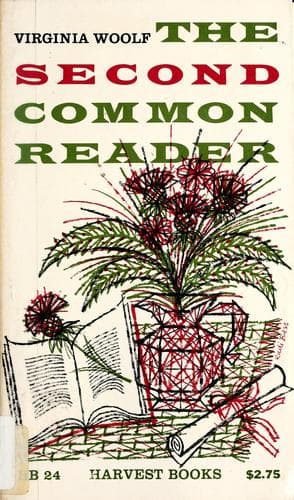
English literature -- History and criticism; Literature, Modern -- History and criticism
with a sublime complacency, he records the discovery of his own
qualities and attainments. He was charitable and brave and averse from
nothing. He was full of feeling for others and merciless upon himself.
“For my conversation, it is like the sun’s, with all men, and with a
friendly aspect to good and bad.” He knows six languages, the laws, the
customs and policies of several states, the names of all the
constellations and most of the plants of his country, and yet, so
sweeping is his imagination, so large the horizon in which he sees this
little figure walking that “methinks I do not know so many as when I did
but know a hundred, and had scarcely ever simpled further than
Cheapside”.
He is the first of the autobiographers. Swooping and soaring at the
highest altitudes he stoops suddenly with loving particularity upon the
details of his own body. His height was moderate, he tells us, his eyes
large and luminous; his skin dark but constantly suffused with blushes.
He dressed very plainly. He seldom laughed. He collected coins, kept
maggots in boxes, dissected the lungs of frogs, braved the stench of the
spermaceti whale, tolerated Jews, had a good word for the deformity of
the toad, and combined a scientific and sceptical attitude towards most
things with an unfortunate belief in witches. In short, as we say when
we cannot help laughing at the oddities of people we admire most, he was
a character, and the first to make us feel that the most sublime
speculations of the human imagination are issued from a particular man,
whom we can love. In the midst of the solemnities of the Urn Burial we
smile when he remarks that afflictions induce callosities. The smile
broadens to laughter as we mouth out the splendid pomposities, the
astonishing conjectures of the _Religio Medici_. Whatever he writes is
stamped with his own idiosyncrasy, and we first become conscious of
impurities which hereafter stain literature with so many freakish
colours that, however hard we try, make it difficult to be certain
whether we are looking at a man or his writing. Now we are in the
presence of sublime imagination; now rambling through one of the finest
lumber rooms in the world—a chamber stuffed from floor to ceiling with
ivory, old iron, broken pots, urns, unicorns’ horns, and magic glasses
full of emerald lights and blue mystery.
[Footnote 2: _Hakluyf’s Collection of the Early Voyages, Travels,
and Discoveries of the English Nation_, five volumes, 4 to, 1810.]
_Notes on an Elizabethan
Play_
Public-domain text, read in full here on John Shaqi.
Reviews
Reviews
No reviews yet
Be the first to share your thoughts on this work.
Join the Discussion
Join the discussion
Sign in to leave a comment or review.
Sign InorCreate an account