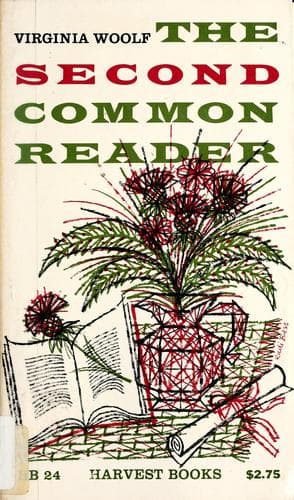
English literature -- History and criticism; Literature, Modern -- History and criticism
In all these matters Addison was on the side of sense and taste and
civilisation. Of that little fraternity, often so obscure and yet so
indispensable, who in every age keep themselves alive to the importance
of art and letters and music, watching, discriminating, denouncing and
delighting, Addison was one—distinguished and strangely contemporary
with ourselves. It would have been, so one imagines, a great pleasure to
take him a manuscript; a great enlightenment, as well as a great honour,
to have his opinion. In spite of Pope, one fancies that his would have
been criticism of the best order, open-minded and generous to novelty,
and yet, in the final resort, unfaltering in its standards. The boldness
which is a proof of vigour is shown by his defence of “Chevy Chase”. He
had so clear a notion of what he meant by the “very spirit and soul of
fine writing” as to track it down in an old barbarous ballad or
rediscover it in “that divine work” “Paradise Lost”. Moreover, far from
being a connoisseur only of the still, settled beauties of the dead, he
was aware of the present; a severe critic of its “Gothic taste”,
vigilant in protecting the rights and honours of the language, and all
in favour of simplicity and quiet. Here we have the Addison of Will’s
and Button’s, who, sitting late into the night and drinking more than
was good for him, gradually overcame his taciturnity and began to talk.
Then he “chained the attention of every one to him”. “Addison’s
conversation”, said Pope, “had something in it more charming than I have
found in any other man.” One can well believe it, for his essays at
their best preserve the very cadence of easy yet exquisitely modulated
conversation—the smile checked before it has broadened into laughter,
the thought lightly turned from frivolity or abstraction, the ideas
springing, bright, new, various, with the utmost spontaneity. He seems
to speak what comes into his head, and is never at the trouble of
raising his voice. But he has described himself in the character of the
lute better than any one can do it for him.
The lute is a character directly opposite to the drum, that sounds very
finely by itself, or in a very small concert. Its notes are exquisitely
sweet, and very low, easily drowned in a multitude of instruments, and
even lost among a few, unless you give a particular attention to it. A
lute is seldom heard in a company of more than five, whereas a drum will
show itself to advantage in an assembly of 500. The lutanists,
therefore, are men of a fine genius, uncommon reflection, great
affability, and esteemed chiefly by persons of a good taste, who are the
only proper judges of so delightful and soft a melody.
Public-domain text, read in full here on John Shaqi.
Reviews
Reviews
No reviews yet
Be the first to share your thoughts on this work.
Elsewhere in the archive
Join the Discussion
Join the discussion
Sign in to leave a comment or review.
Sign InorCreate an account