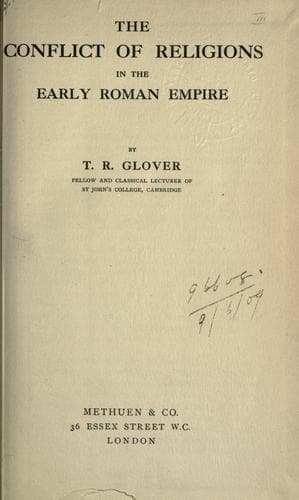
The Conflict of Religions in the Early Roman EmpireGlover, T. R. (Terrot Reaveley)
Religion
The Conflict of Religions in the Early Roman Empire
Glover, T. R. (Terrot Reaveley)
Christianity and other religions; Church history -- Primitive and early church, ca. 30-600; Rome -- Religion
We come now to the central question of man's relation with God, never
before so vital a matter to serious people in the Mediterranean world.
Jew and Greek and Egyptian were all full of it, and men's talk ran much
upon it. Men were anxious to be right with God, and sought earnestly
in the ways of their fathers for the means of communion with God and
the attainment of some kind of safety in their position with regard to
him. Jew and Greek alike talked of heaven and hell and of the ways to
them. They talked of righteousness and holiness--"holy" is one of the
great words of the period--and they sought these things in ritual and
abstinence. Modern Jews resent the suggestion that the thousand and
one regulations as to ceremonial purity, and the casuistries, as many
or more, spun out of the law and the traditions, ranked with the great
commandments of neighbourly love and the worship of the One God. No
doubt they are right, but it is noticeable that in practice the common
type of mind is more impressed with minutiae than with principles. The
Southern European to-day will do murder on little provocation, but to
eat meat in Lent is sin. But, without attributing such conspicuous
sins as theft and adultery and murder to the Pharisees, it is clear
that in establishing their own righteousness they laid excessive stress
on the details of the law, on Sabbath-keeping (a constant topic with
the Christian apologists), on tithes, and temple ritual, on the washing
of pots and plates--still rigorously maintained by the modern Jew--and
all this was supposed to constitute holiness. Jesus with the clear
incisive word of genius dismissed it all as "acting." The Pharisee was
essentially an actor--playing to himself the most contemptible little
comedies of holiness. {132} Listen, cries Jesus, and he tells the tale
of the man fallen among thieves and left for dead, and how priest and
Levite passed by on the other side, fearing the pollution of a corpse,
and how they left mercy, God's own work--"I will have mercy and not
sacrifice" was one of his quotations from Hosea,--to be done by one
unclean and damned--the Samaritan. Whited sepulchres! he cries,
pretty to look at, but full of what? of death, corruption and foulness.
"How _can_ you escape from the judgment of hell?" he asked them, and no
one records what they answered or could answer.
[Sidenote: Jesus the liberator]
Public-domain text, read in full here on John Shaqi.
Reviews
Reviews
No reviews yet
Be the first to share your thoughts on this work.
Elsewhere in the archive
Join the Discussion
Join the discussion
Sign in to leave a comment or review.
Sign InorCreate an account