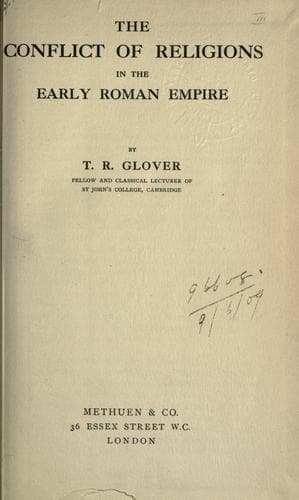
The Conflict of Religions in the Early Roman EmpireGlover, T. R. (Terrot Reaveley)
Religion
The Conflict of Religions in the Early Roman Empire
Glover, T. R. (Terrot Reaveley)
Christianity and other religions; Church history -- Primitive and early church, ca. 30-600; Rome -- Religion
These are some of the features of the founder of the new religion as
revealed in the Gospels--features that permanently compel attention,
but after all it was not the consideration of these that conquered the
world. Of far more account in winning the world was the death of this
man upon the cross. It was the cross that gave certainty to all that
Jesus had taught about God. The church sturdily and indignantly
repudiated any suggestion, however philosophic, that in any way seemed
likely to lessen the significance of the cross. That he should taste
the ultimate bitterness of death undisguised, that he should refuse the
palliative wine and myrrh (an action symbolic of his {139} whole
attitude to everything and to death itself), that with open eyes he
should set his face for Jerusalem, and with all the sensitiveness of a
character, so susceptive of impression and so rich in imagination, he
should expose himself to our experience--to the foretaste of death, to
the horror of the unknown, and to the supreme fear--the dread of the
extinction of personality; and that he should actually undergo all he
foresaw, as the last cry upon the cross testified--all this let the
world into the real meaning of his central thought upon God. It was
the pledge of his truth, and thus made possible our reconciliation with
God. If we may take an illustration from English literature,
Shakespeare's _Julius Caesar_ may suggest something here. It has been
noticed how small a part Caesar plays in the drama--how little he
speaks; what weakness he shows--epilepsy, deafness, arrogance,
vacillation; and how soon he disappears. Would not the play have been
better named _Brutus_? Yet Shakespeare knew what he was doing; for the
whole play is Julius Caesar, from the outbreak of Cassius at the
beginning--
Why! man he doth bestride the narrow world
Like a colossus,
to the bitter cry of Brutus at the end--
O Julius Caesar, thou art mighty yet!
Caesar determines everything in the story. Every character in it is a
mirror in which we see some figure of him, and the life of every man
there is made or unmade by his mind toward Caesar. Caesar is the one
great determining factor in the story; living and dead, he is the
centre and explanation of it all.
Public-domain text, read in full here on John Shaqi.
Reviews
Reviews
No reviews yet
Be the first to share your thoughts on this work.
Elsewhere in the archive
Join the Discussion
Join the discussion
Sign in to leave a comment or review.
Sign InorCreate an account