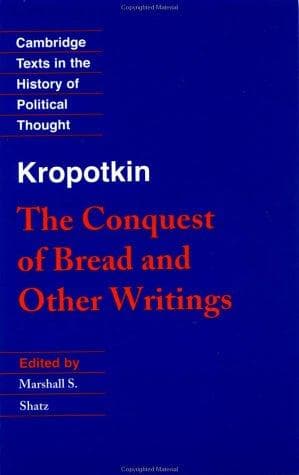
The Conquest of BreadKropotkin, Petr Alekseevich, kniaz
Philosophy
The Conquest of Bread
Kropotkin, Petr Alekseevich, kniaz
Anarchism; Communism
The cities, bound together by railroads and waterways, are organisms
which have lived through centuries. Dig beneath them and you find, one
above another, the foundations of streets, of houses, of theatres, of
public buildings. Search into their history and you will see how the
civilization of the town, its industry, its special characteristics,
have slowly grown and ripened through the co-operation of generations of
its inhabitants before it could become what it is to-day. And even
to-day, the value of each dwelling, factory, and warehouse, which has
been created by the accumulated labour of the millions of workers, now
dead and buried, is only maintained by the very presence and labour of
legions of the men who now inhabit that special corner of the globe.
Each of the atoms composing what we call the Wealth of Nations owes its
value to the fact that it is a part of the great whole. What would a
London dockyard or a great Paris warehouse be if they were not situated
in these great centres of international commerce? What would become of
our mines, our factories, our workshops, and our railways, without the
immense quantities of merchandise transported every day by sea and land?
Millions of human beings have laboured to create this civilization on
which we pride ourselves to-day. Other millions, scattered through the
globe, labour to maintain it. Without them nothing would be left in
fifty years but ruins.
There is not even a thought, or an invention, which is not common
property, born of the past and the present. Thousands of inventors,
known and unknown, who have died in poverty, have co-operated in the
invention of each of these machines which embody the genius of man.
Thousands of writers, of poets, of scholars, have laboured to increase
knowledge, to dissipate error, and to create that atmosphere of
scientific thought, without which the marvels of our century could never
have appeared. And these thousands of philosophers, of poets, of
scholars, of inventors, have themselves been supported by the labour of
past centuries. They have been upheld and nourished through life, both
physically and mentally, by legions of workers and craftsmen of all
sorts. They have drawn their motive force from the environment.
Public-domain text, read in full here on John Shaqi.
Reviews
Reviews
No reviews yet
Be the first to share your thoughts on this work.
Join the Discussion
Join the discussion
Sign in to leave a comment or review.
Sign InorCreate an account