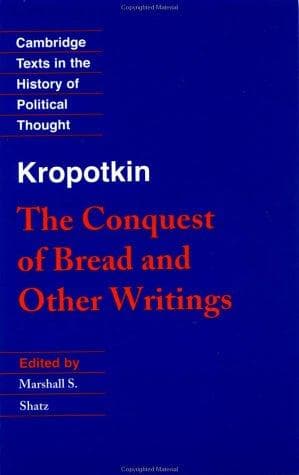
The Conquest of BreadKropotkin, Petr Alekseevich, kniaz
Philosophy
The Conquest of Bread
Kropotkin, Petr Alekseevich, kniaz
Anarchism; Communism
The State will dole out charity. Thence to the English poor-law and the
workhouse is but a step.
There is but a slight difference, because even this stepmother of a
society against whom we are in revolt has also been compelled to
_temper_ her individualist principles; she, too, has had to make
concessions in a communist direction and under the same form of charity.
She, too, distributes halfpenny dinners to prevent the pillaging of her
shops; builds hospitals--often very bad ones, but sometimes splendid
ones--to prevent the ravages of contagious diseases. She, too, after
having paid the hours of labour, shelters the children of those she has
wrecked. She takes their needs into consideration and doles out charity.
Poverty, we have said elsewhere, was the primary cause of wealth. It was
poverty that created the first capitalist; because, before accumulating
"surplus value," of which we hear so much, men had to be sufficiently
destitute to consent to sell their labour, so as not to die of hunger.
It was poverty that made capitalists. And if the number of the poor
increased so rapidly during the Middle Ages, it was due to the invasions
and wars that followed the founding of States, and to the increase of
riches resulting from the exploitation of the East. These two causes
tore asunder the bonds that kept men together in the agrarian and urban
communities, and taught them to proclaim the principle of _wages_, so
dear to the exploiters, instead of the solidarity they formerly
practiced in their tribal life.
And it is this principle that is to spring from a revolution which men
dare to call by the name of Social Revolution,--a name so dear to the
starved, the oppressed, and the sufferers!
It can never be. For the day on which old institutions will fall under
the proletarian axe, voices will cry out: "Bread, shelter, ease for
all!" And those voices will be listened to; the people will say: "Let us
begin by allaying our thirst for life, for happiness, for liberty, that
we have never quenched. And when we shall have tasted of this joy, we
will set to work to demolish the last vestiges of middle-class rule: its
morality drawn from account books, its 'debit and credit' philosophy,
its 'mine and yours' institutions. 'In demolishing we shall build,' as
Proudhon said; and we shall build in the name of Communism and Anarchy."
CHAPTER XIV
CONSUMPTION AND PRODUCTION
I
Looking at society and its political organization from a different
standpoint than that of all the authoritarian schools--for we start from
a free individual to reach a free society, instead of beginning by the
State to come down to the individual--we follow the same method in
economic questions. We study the needs of the individuals, and the means
by which they satisfy them, before discussing Production, Exchange,
Taxation, Government, and so on. At first sight the difference may
appear trifling, but in reality it upsets all the canons of official
Political Economy.
Public-domain text, read in full here on John Shaqi.
Reviews
Reviews
No reviews yet
Be the first to share your thoughts on this work.
Elsewhere in the archive
Join the Discussion
Join the discussion
Sign in to leave a comment or review.
Sign InorCreate an account