Produced by Matthew Stapleton
1788
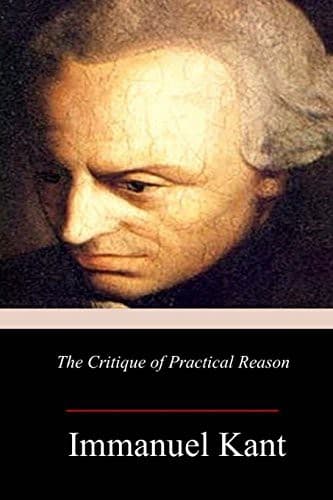
THE CRITIQUE OF PRACTICAL REASON
by Immanuel Kant
translated by Thomas Kingsmill Abbott
PREFACE.
This work is called the Critique of Practical Reason, not of the
pure practical reason, although its parallelism with the speculative
critique would seem to require the latter term. The reason of this
appears sufficiently from the treatise itself. Its business is to show
that there is pure practical reason, and for this purpose it
criticizes the entire practical faculty of reason. If it succeeds in
this, it has no need to criticize the pure faculty itself in order
to see whether reason in making such a claim does not presumptuously
overstep itself (as is the case with the speculative reason). For
if, as pure reason, it is actually practical, it proves its own
reality and that of its concepts by fact, and all disputation
against the possibility of its being real is futile.
With this faculty, transcendental freedom is also established;
freedom, namely, in that absolute sense in which speculative reason
required it in its use of the concept of causality in order to
escape the antinomy into which it inevitably falls, when in the
chain of cause and effect it tries to think the unconditioned.
Speculative reason could only exhibit this concept (of freedom)
problematically as not impossible to thought, without assuring it
any objective reality, and merely lest the supposed impossibility of
what it must at least allow to be thinkable should endanger its very
being and plunge it into an abyss of scepticism.
Inasmuch as the reality of the concept of freedom is proved by an
apodeictic law of practical reason, it is the keystone of the whole
system of pure reason, even the speculative, and all other concepts
(those of God and immortality) which, as being mere ideas, remain in
it unsupported, now attach themselves to this concept, and by it
obtain consistence and objective reality; that is to say, their
possibility is proved by the fact that freedom actually exists, for
this idea is revealed by the moral law.
Public-domain text, read in full here on John Shaqi.
Reviews
Reviews
No reviews yet
Be the first to share your thoughts on this work.
Join the Discussion
Join the discussion
Sign in to leave a comment or review.
Sign InorCreate an account