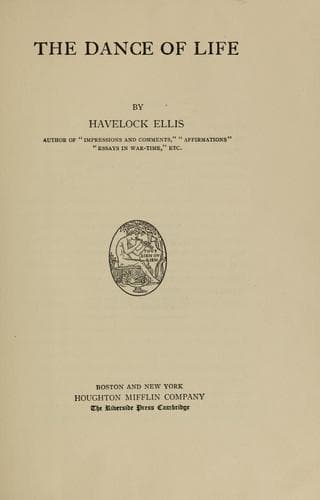
Conduct of life; English essays -- 20th century; Ethics; Philosophy
We must not, therefore, treat our imagination with contempt as was
formerly the fashion, but rather the reverse. The two great periods of
English Philosophy, Vaihinger remarks, ended with Ockham and with Hume,
who each took up, in effect, the fictional point of view, but both too
much on the merely negative side, without realising the positive and
constructive value of fictions. English law has above all realised it,
even, he adds, to the point of absurdity. Nothing is so precious as
fiction, provided only one chooses the right fiction. “Matter” is such a
fiction. There are still people who speak with lofty contempt of
“Materialism”; they mean well, but they are unhappy in their terms of
abuse. When Berkeley demonstrated the impossibility of “matter,” he
thought he could afford to throw away the conception as useless. He was
quite wrong; it is logically contradictory ideas that are the most
valuable. Matter is a fiction, just as the fundamental ideas with which
the sciences generally operate are mostly fictions, and the scientific
materialisation of the world has proved a necessary and useful fiction,
only harmful when we regard it as hypothesis and therefore possibly
true. The representative world is a system of fictions. It is a symbol
by the help of which we orient ourselves. The business of science is to
make the symbol ever more adequate, but it remains a symbol, a means of
action, for action is the last end of thinking.
The “atom,” to which matter is ultimately reduced, is regarded by
Vaihinger as equally a fiction, though it was at first viewed as an
hypothesis, and it may be added that since he wrote it seems to have
returned to the stage of hypothesis.[41] But when with Boscovich the
“atom” was regarded as simply the bearer of energy, it became “literally
a hypostatised nothing.” We have to realise at the same time that every
“thing” is a “summatory fiction,” for to say, as is often said, that a
“thing” has properties and yet has a real existence apart from its
properties is obviously only a convenient manner of speech, a “verbal
fiction.” The “force of attraction,” as Newton himself pointed out,
belongs to the same class of summatory fictions.
Public-domain text, read in full here on John Shaqi.
Reviews
Reviews
No reviews yet
Be the first to share your thoughts on this work.
Elsewhere in the archive
Join the Discussion
Join the discussion
Sign in to leave a comment or review.
Sign InorCreate an account