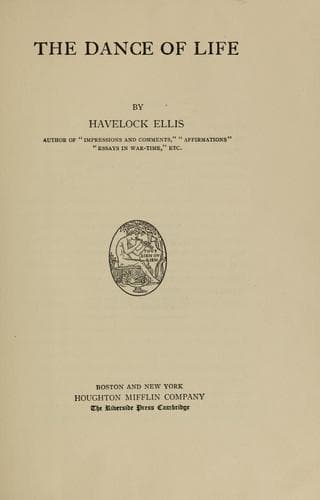
Conduct of life; English essays -- 20th century; Ethics; Philosophy
Vaihinger is throughout careful to distinguish fiction alike from
hypothesis and dogma. He regards the distinction as, methodologically,
highly important, though not always easy to make. The “dogma” is put
forward as an absolute and unquestionable truth; the “hypothesis” is a
possible or probable truth, such as Darwin’s doctrine of descent; the
“fiction” is impossible, but it enables us to reach what for us is
relatively truth, and, above all, while hypothesis simply contributes to
knowledge, fiction thus used becomes a guide to practical action and
indispensable to what we feel to be progress. Thus the mighty and
civilising structure of Roman law was built up by the aid of what the
Romans themselves recognised as fictions, while in the different and
more flexible system of English laws a constant inspiration to action
has been furnished by the supposed privileges gained by Magna Carta,
though we now recognise them as fictitious. Many of our ideas tend to go
through the three stages of Dogma, Hypothesis, and Fiction, sometimes in
that order and sometimes in the reverse order. Hypothesis especially
presents a state of labile stability which is unpleasant to the mind, so
it tends to become either dogma or fiction. The ideas of Christianity,
beginning as dogmas, have passed through all three stages in the minds
of thinkers during recent centuries: the myths of Plato, beginning as
fiction, not only passed through the three stages, but then passed back
again, being now again regarded as fiction. The scientifically valuable
fiction is a child of modern times, but we have already emerged from the
period when the use of fiction was confined to the exact sciences.
Thus we find fiction fruitfully flourishing in the biological and social
sciences and even in the highest spheres of human spiritual activity.
The Linnæan and similar classificatory systems are fictions, even though
put forward as hypotheses, having their value simply as pictures, as
forms of representation, but leading to contradictions and liable to be
replaced by other systems which present more helpful pictures. There are
still people who disdain Adam Smith’s “economic man,” as though
proceeding from a purely selfish view of life, although Buckle,
forestalling Vaihinger, long ago explained that Smith was deliberately
making use of a “valid artifice,” separating facts that he knew to be in
nature inseparable—he based his moral theory on a totally different kind
of man—because so he could reach results approximately true to the
observed phenomena. Bentham also adopted a fiction for his own system,
though believing it to be an hypothesis, and Mill criticised it as being
“geometrical”; the criticism is correct, comments Vaihinger, but the
method was not thereby invalidated, for in complicated fields no other
method can be fruitfully used.
Public-domain text, read in full here on John Shaqi.
Reviews
Reviews
No reviews yet
Be the first to share your thoughts on this work.
Elsewhere in the archive
Join the Discussion
Join the discussion
Sign in to leave a comment or review.
Sign InorCreate an account