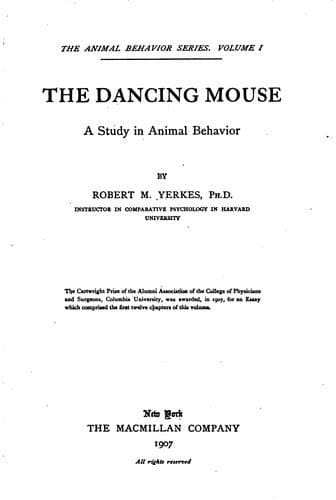
The Dancing Mouse: A Study in Animal BehaviorYerkes, Robert Mearns
Science
The Dancing Mouse: A Study in Animal Behavior
Yerkes, Robert Mearns
Animal behavior; Dancing mice
210 0 1 2 0
212 2 2 0 0
214 0 1 -- 0
220 2 4 2 0
410 1 3 2 1
420 2 4 1 4
Averages 1.2 2.5 1.2 0.8
FEMALES
211 2 2 0 0
213 2 2 -- 3
215 0 1 2 2
225 3 2 0 0
415 1 3 2 1
425 1 7 0 0
Averages 1.5 2.8 0.7 1.0
That covering the floor with smoked paper forced the mice to relearn the
path, in large measure, is evident from the results of Column IV. An
average of ten tests was necessary to enable the mice to follow the path
correctly. It is almost certain, however, that the interference with the
perfectly formed labyrinth habit which this change in the condition of the
floor caused was not due to the removal of important tactual sense data.
As Column V shows, the number of errors in total darkness is very small.
Some individuals gave no sign of being disturbed by the absence of visual
guidance, others at first seemed confused. I have given in the table the
number of errors in the first darkness test and the number of the first
test in which no mistakes occurred.
No more disturbance of the dancer's ability to follow the path which it
had learned resulted from washing the labyrinth thoroughly than from
darkening the room. Indeed it is clear from Column VI that the path was
not followed by the use of smell. However, the test in darkness, after the
odor of the box had been removed, proved conclusively that in most cases
the mice could follow the path correctly without visual or olfactory
guidance.
The behavior of 18 individuals as it was observed in labyrinth B makes
perfectly evident three important facts, (1) In following the path which
it has learned, the dancer in most instances is not guided to any
considerable extent by a trail (odor or touch) which has been formed by
its previous journeys over the route; (2) sight is quite unnecessary for
the easy and perfect execution of the labyrinth habit, for even those
individuals which are at first confused by the darkening of the experiment
room are able after a few tests to follow the path correctly; (3) and,
finally, smell, which according to current opinion is the chiefly
important sense of mice and rats, is not needful for the performance of
this habitual act.
Public-domain text, read in full here on John Shaqi.
Reviews
Reviews
No reviews yet
Be the first to share your thoughts on this work.
Elsewhere in the archive
Join the Discussion
Join the discussion
Sign in to leave a comment or review.
Sign InorCreate an account