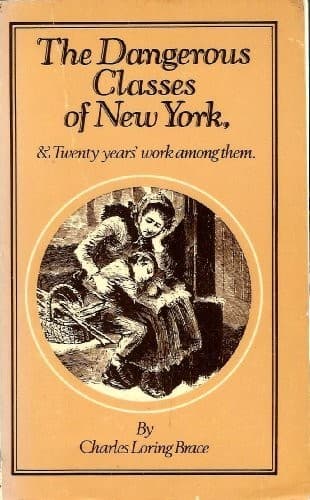
The Dangerous Classes of New York, and Twenty Years' Work Among Them — John Shaqi
The Dangerous Classes of New York, and Twenty Years' Work Among ThemBrace, Charles Loring
History
The Dangerous Classes of New York, and Twenty Years' Work Among Them
Brace, Charles Loring
Child welfare -- New York (State) -- New York; New York (N.Y.) -- Social conditions; Poor -- New York (State) -- New York
Produced by Gary Sandino, from scans by Google.
Digitized by Google.
THE
DANGEROUS CLASSES OF NEW YORK,
AND
TWENTY YEARS' WORK AMONG THEM.
BY
CHARLES LORING BRACE,
AUTHOR OF
"HUNGARY IN 1851," "HOME LIFE IN GERMANY,"
"THE RACES OF THE OLD WORLD," ETC., ETC.
"Ameliorer l'homme par le terre et le terre par l'homme."--_Demetz._
NEW YORK.
WYNKOOP & HALLENBECK, PUBLISHERS,
113 FULTON STREET.
-----
1872.
[Illustration: LODGING-HOUSES FOR HOMELESS BOYS--AS THEY WERE. NO. 1.]
------------------------------------------------
ENTERED, according to Act of Congress, in the year 1872, by
CHARLES LORING BRACE,
in the Office of the Librarian of Congress at Washington.
------------------------------------------------
WYNKOOP & HALLENBECK,
FINE BOOK PRINTERS.
DEDICATION.
-----
To the many co-laborers, men and women, who have not held their comfort
or even their lives dear unto themselves, but have striven, through many
years, to teach the ignorant, to raise up the depressed, to cheer the
despairing, to impart a higher life and a Christian hope to the outcast
and neglected youth of this city, and thus save society from their
excesses, this simple record of common labors, and this sketch of the
terrible evils sought to be cured, is respectfully dedicated.
INTRODUCTION.
-----
The great pioneer in the United States, in the labors of penal Reform
and the prevention of crime,--EDWARD LIVINGSTON,--said as long ago as
1833, in his famous "Introductory Report to the Code of Reform and
Prison Discipline": "As prevention in the diseases of the body is less
painful, less expensive, and more efficacious than the most skillful
cure, so in the moral maladies of society, to arrest the vicious before
the profligacy assumes the shape of crime; to take away from the poor
the cause or pretence of relieving themselves by fraud or theft; to
reform them by education and make their own industry contribute to their
support, although difficult and expensive, will be found more effectual
in the suppression of offences and more economical than the best
organized system of punishment."--(p. 322.)
Public-domain text, read in full here on John Shaqi.
Reviews
Reviews
No reviews yet
Be the first to share your thoughts on this work.
Join the Discussion
Join the discussion
Sign in to leave a comment or review.
Sign InorCreate an account