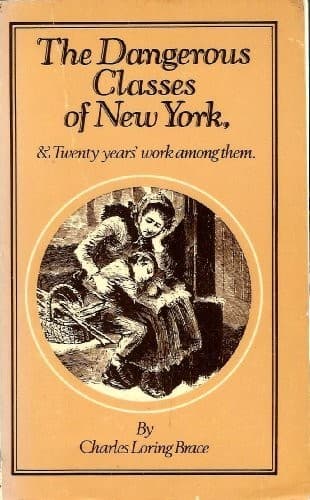
The Dangerous Classes of New York, and Twenty Years' Work Among ThemBrace, Charles Loring
History
The Dangerous Classes of New York, and Twenty Years' Work Among Them
Brace, Charles Loring
Child welfare -- New York (State) -- New York; New York (N.Y.) -- Social conditions; Poor -- New York (State) -- New York
The Object System teaches geography very ingeniously. The pupil begins
by getting into his mind the idea of a map. This is by no means so
simple an idea as might be supposed, as witness the impossibility almost
of making a savage understand it. The child is first told to point to
the different points of the compass; then he marks them down on a
blackboard; next he draws a plan of the room, and each scholar attempts
to locate an object on the plan, and is corrected by the school, if
wrong. Next comes a plan of the district or town; then a globe is shown,
and the idea of position on the globe given, and of the outlines of
different countries. Soon the pupil learns to draw maps on the board,
and to place rivers, bays, lakes, and oceans. The book-questions now to
be presented will not be on purely political geography or merely
arbitrary lists of names. The child is taken on imaginary journeys up
rivers, over mountains, by railroads, and must describe from the lesson
he has learned the different productions, the animals, the character of
the scenery, the vegetation, and the occupations of the people. Thus
geography becomes a kind of natural science, deeply interesting to the
pupil, and touching his imagination. Certain dry geographical names are
forever after associated in his mind with certain animals and plants and
a peculiar scenery.
Natural history is also taught in this system, but not by the usual dry
method. The teacher brings in a potato, for instance, and carries the
pupil along by questions through all its growth and development. Or she
takes flowers, or leaves, or seeds, and stamps the most important
phenomena about them on the scholar's mind by an objective lesson.
Prints of animals are presented, and the teacher begins at the lowest
orders, and rises up in regular gradation, questioning the children as
to the uses and purposes of every feature and limb. They work out their
own natural philosophy. They observe, and then reason; and what they
learn is learned in philosophical order, and imprinted by their own
efforts on their memories. It is astonishing how much, in these simple
methods, may be learned in natural science by very young children; and
what nutritive but simple food may be supplied to their minds for all
future years.
From lessons in science thus given, the teacher rises easily to lessons
of morality and religion. Nothing even in moral teaching impresses a
child's mind like pictures, stories, or parables, or some form of
"object-teaching." The modern charts and books are extremely ingenious
in giving religious lessons through the senses.
Public-domain text, read in full here on John Shaqi.
Reviews
Reviews
No reviews yet
Be the first to share your thoughts on this work.
Elsewhere in the archive
Join the Discussion
Join the discussion
Sign in to leave a comment or review.
Sign InorCreate an account