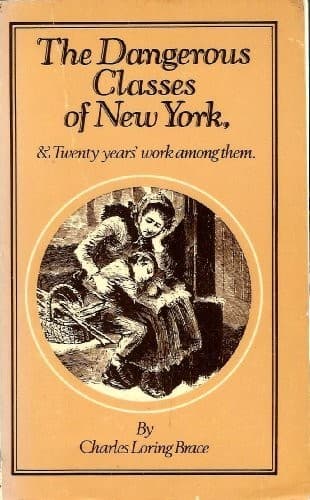
The Dangerous Classes of New York, and Twenty Years' Work Among ThemBrace, Charles Loring
History
The Dangerous Classes of New York, and Twenty Years' Work Among Them
Brace, Charles Loring
Child welfare -- New York (State) -- New York; New York (N.Y.) -- Social conditions; Poor -- New York (State) -- New York
Drunkenness has darkened the childhood of some, and made home a hideous
place, till they have been glad to sleep in the crowded cellar or the
bare attic of some thronged "tenement," and then go forth to pick up a
living as they could in the great metropolis. Some are orphans, some
have parents whom they detest, some are children of misfortune, and
others of vice; some are foreigners, some native. They come from the
north and the south, the east and the west; all races and countries are
represented among them. They are not habitually vicious, or they would
not be on the streets. They are unlucky, unfortunate, getting a
situation only to lose it, and finding a home, to be soon driven from
it. Their habits are irregular, they do not like steady labor, they have
learned nothing well, they have no discipline, their clothes are
neglected, they have no appreciation of what neatness is, yet if they
earn a few shillings extra, they are sore to spend them on some foolish
gewgaw. Many of them are pretty and bright, with apparently fine
capacities, but inheriting an unusual quantity of the human tendencies
to evil. They are incessantly deceived and betrayed, and they as
constantly deceive others. Their cunning in concealing their indulgences
or vices surpasses all conception. Untruth seems often more familiar to
them than truth. Their worst quality is their superficiality. There is
no depth either to their virtues or vices. They sin, and immediately
repent with alacrity; they live virtuously for years, and a straw seems
suddenly to turn them. They weep at the presentation of the divine
character in Christ, and pray with fervency; and, the very next day, may
ruin their virtue or steal their neighbor's garment, or take to
drinking, or set a whole block in ferment with some biting scandal. They
seem to be children, but with woman's passion, and woman's jealousy and
scathing tongue. They trust a superior as a child; they neglect
themselves, and injure body and mind as a child might; they have a
child's generosity, and occasional freshness of impulse and desire of
purity; but their passions sweep over them with the force of maturity,
and their temper, and power of setting persons by the ears, and
backbiting, and occasional intensity of hate, belong to a later period
of life. Not unfrequently, when real danger or severe sickness arouses
them, they show the wonderful qualities of womanhood in a power of
sacrifice which utterly forgets self, and a love which shines brightly,
eyen through the shadow of death.
But their combination of childishness and undisciplined maturity is an
extremely difficult one to manage practically, and exposes them to
endless sufferings and dangers. Their condition fifteen years ago seemed
a thoroughly hopeless one.
Public-domain text, read in full here on John Shaqi.
Reviews
Reviews
No reviews yet
Be the first to share your thoughts on this work.
Elsewhere in the archive
Join the Discussion
Join the discussion
Sign in to leave a comment or review.
Sign InorCreate an account