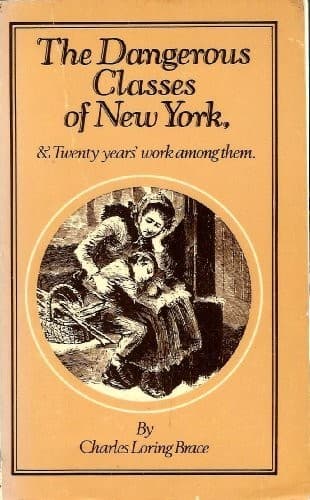
The Dangerous Classes of New York, and Twenty Years' Work Among ThemBrace, Charles Loring
History
The Dangerous Classes of New York, and Twenty Years' Work Among Them
Brace, Charles Loring
Child welfare -- New York (State) -- New York; New York (N.Y.) -- Social conditions; Poor -- New York (State) -- New York
Were such lads, on the other hand, put in gardens, or at farm-work, they
would find much more pleasure in it. The watching the growth of plants,
the occasional chance for fruit-gathering, the "spurts" of work peculiar
to farming, the open air and sunshine, and dealing with flowers and
grains, with cattle, horses, and fowls, are all attractive to children,
and especially to children of this class. Moreover, when they have
learned the business, they are sure in this country, of the best
occupation which a laboring man can have; and when they graduate, they
can easily find places on farms, where they will get good wages, and be
less exposed to temptations than if engaged in city trades. There seems
to me something, too, in labor in the soil, which is more medicinal to
"minds diseased" than work in shops. The nameless physical and mental
maladies which take possession of these children of vice and poverty are
more easily cured and driven off in outdoor than indoor labor.
I am disposed to think this is peculiarly true of young girls who have
begun criminal courses. They have been accustomed to such excitement and
stir, that the steady toil of a kitchen and household seldom reforms
them.
The remarkable success of Mr. Pease for a few years in his labors for
abandoned women in the Five Points, was due mainly to the incessant stir
and activity he infused into his "House of Industry," which called off
the minds of these poor creatures from their sins and temptations. But,
better than this, would be the idea, so often broached, of a "School in
gardening" for young girls, in which they could be taught in the open
air, and learn the florist's and gardener's art. This busy and pleasant
labor, increasingly profitable every year, would often drive out the
evil spirit, and fit the workers, for paying professions after they left
the School.
The true plan for a Reformatory School, as has so often been said, is
the Family System; that is, breaking the Asylum up into small houses,
with little "groups" of children in each, under their own immediate
"director" or teacher, who knows every individual, and adapts his
government to the wants of each.
The children cook meals, and do house-labor, and eat in these small
family groups. Each child, whether boy or girl, learns in this way
something of housekeeping, and the mode of caring for the wants of a
small family. He has to draw his water, split his wood, kindle his
fires, light his lamps, and take care of the Cottage, as he will, by and
by, have to do in his own little "shanty" or "cottage." Around the
Cottage should be a small garden, which each "family" would take a pride
in cultivating; and beyond, the larger farm, which they all might work
together.
Public-domain text, read in full here on John Shaqi.
Reviews
Reviews
No reviews yet
Be the first to share your thoughts on this work.
Elsewhere in the archive
Join the Discussion
Join the discussion
Sign in to leave a comment or review.
Sign InorCreate an account