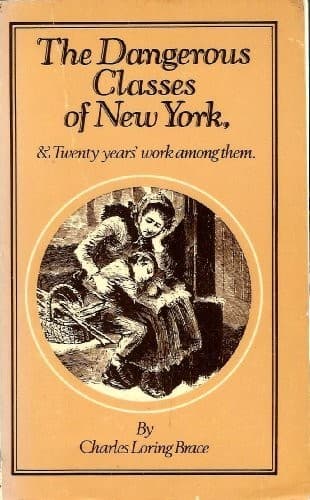
The Dangerous Classes of New York, and Twenty Years' Work Among ThemBrace, Charles Loring
History
The Dangerous Classes of New York, and Twenty Years' Work Among Them
Brace, Charles Loring
Child welfare -- New York (State) -- New York; New York (N.Y.) -- Social conditions; Poor -- New York (State) -- New York
In regard to the question, how far the affording facilities for the care
of illegitimate children increases the temptation to vicious indulgence,
we believe, as in most similar matters, the true course for the
legislator lies between extremes. His first duty is, of course, one of
humanity, to preserve life. Whenever helpless or abandoned children are
found, the duty of the State is to take care of them, though this care
may, in certain cases, offer an inducement to crime. The danger to the
child, if neglected, is certain; that to the community, of inducing
other mothers to abandon their offering, is remote and uncertain. On the
other hand, the State is under no obligation to offer inducements to
parents to neglect their illegitimate children; it is rather bound to
throw all possible responsibility on those who have brought them into
the world.
The extreme French plan of presenting "turning-tables" to those who
wished to abandon their children, was found to increase the crime, and
the number of such unfortunates. It has been given up even in Paris
itself. The Russian Foundling Asylum in St. Petersburg found it
necessary to make its conditions more strict than they were in the
beginning as laxness tended to encourage sexual vice. The universal
experience is, that if a mother can be compelled to care for her infant,
during a month or two, she will then never murder or abandon it. But, if
she is relieved of the charge very early, she feels little affection or
remorse, and often plunges into indulgence again without restraint. By
requiring conditions and letting some little time pass before the mother
gives the child up, she is kept in a better moral condition, and made to
feel more the responsibility of her position, and is thus withheld from
future vice.
On the other hand, the extreme position taken substantially by the New
York legislators, whereby no mother could get rid of an illegitimate
child, except by publicly entering the Alms-house, or by infanticide,
undoubtedly stimulated the crimes of foeticide and child-murder. No
doubt the new Catholic and Protestant Foundling Asylums contemplated in
New York will steer between these two extremes, will connect the mother
with the child as long as possible, and require all reasonable
conditions before admitting the infant, and, at the same time, not drive
a seduced or unfortunate woman with her babe out to take her chances in
the streets.
CHAPTER XXXV.
RELIGIOUS INSTRUCTION FOR STREET-CHILDREN.
The subject of applying Religion as a lever to raise up the class of
neglected children whom we have been describing, is a difficult one, but
vital to the Science of Reform. The objects of those engaged in laboring
for this class are to raise them above temptation, to make them of more
value to themselves, and to Society, and, if possible, to elevate them
to the highest range of life, where the whole character is governed by
Religion.
Public-domain text, read in full here on John Shaqi.
Reviews
Reviews
No reviews yet
Be the first to share your thoughts on this work.
Elsewhere in the archive
Join the Discussion
Join the discussion
Sign in to leave a comment or review.
Sign InorCreate an account