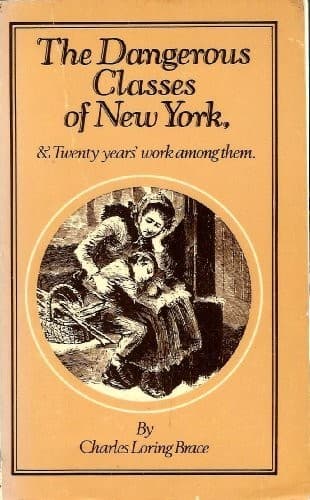
The Dangerous Classes of New York, and Twenty Years' Work Among ThemBrace, Charles Loring
History
The Dangerous Classes of New York, and Twenty Years' Work Among Them
Brace, Charles Loring
Child welfare -- New York (State) -- New York; New York (N.Y.) -- Social conditions; Poor -- New York (State) -- New York
There is, it is true, a peculiar intensity in the American temperament
which makes the taking of concentrated stimulus natural to it. It will
need some time for men accustomed to work up their nervous system to a
white heat by repeated draughts of whisky or brandy to be content with
weak wines. Perhaps the present generation never will be. But the laws
of health and morality are so manifestly on the side of drinking light
wines as compared with drinking heavy liquors, that any effort at social
improvement in this direction would have a fair chance of success. Even
the slight change of habit involved in drinking leisurely at a table in
the open air with women and children--after the German fashion--would be
a great social reform over the hasty bar-drinking, while standing. The
worst intoxication of this city is with the Irish and American
bar-drinkers, not the German frequenters of gardens.
LIQUOR LAWS.
In regard to legislation, it seems to me that our New York License laws
of 1866 were, with a few improvements, a very "happy medium" in
law-making. The ground was tacitly taken, in that code, that it
subserved the general interests of morality to keep one day free from
riotous or public drinking, and allow the majority of the community to
spend it in rest and worship; and, inasmuch as that day was one of
especial temptation to the working-classes, they were to be treated to a
certain degree like minors, and liquor was to be refused to them on it.
Under this law, also, minors and apprentices, on weekdays, were
forbidden to be supplied with intoxicating drinks, and the liquor-shops
were closed at certain hours of the night. Very properly, also, these
sellers of intoxicating beverages, making enormous profits, and costing
the community immensely in the expenses of crime occasioned by their
trade, were heavily taxed, and paid to the city over a million dollars
annually in fees, licenses, and fines. The effects of the law were
admirable, in the diminution of cases of arrest and crime on the Sunday,
and the checking of the ravages of intoxication.
Public-domain text, read in full here on John Shaqi.
Reviews
Reviews
No reviews yet
Be the first to share your thoughts on this work.
Join the Discussion
Join the discussion
Sign in to leave a comment or review.
Sign InorCreate an account