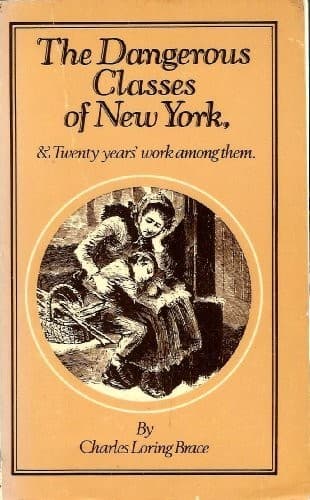
The Dangerous Classes of New York, and Twenty Years' Work Among ThemBrace, Charles Loring
History
The Dangerous Classes of New York, and Twenty Years' Work Among Them
Brace, Charles Loring
Child welfare -- New York (State) -- New York; New York (N.Y.) -- Social conditions; Poor -- New York (State) -- New York
The medical man, however, replies very pertinently that he has nothing
to do with the Divine sanctions; that his business is to cure human
diseases and lessen human suffering wherever he find them; and that
gout, or rheumatism, or diphtheria, or scarlet fever, are as much
"punishments" as the diseases of this vice. If he refused to visit a
patient whenever he thought that his sins had brought upon him his
diseases, he would have very little occupation, and mankind would
receive very little alleviation from the medical art. Nor is he even
called upon to refuse to cure a patient who, he knows, will immediately
begin again his evil courses. The physician is not a judge or an
executioner. He has nothing to do but to cure and alleviate. Influenced
by this aspect of his duty, the medical man almost universally advocates
licenses to prostitutes, based on medical examination, and a strict
legal control of the participants in this offense.
On the other hand, those of us who deal with the moral aspects of the
case, and who know the class that are ruined body and soul by this
criminal business, have a profound dread of anything which, to the
young, should appear to legalize or approve, or even recognize it. The
worst evil in prostitution is to the woman, and the worst element in
that is moral rather than physical.
The man has the tremendous responsibility on his soul of doing his part
in helping to plunge a human being into the lowest depths of misery and
moral degradation. He has also all the moral responsibility which the
Divine law of purity places on each individual, and the farther burden
of possibly causing disease hereafter to the innocent and virtuous.
But the woman who pursues this as a business has seldom any hope in this
world, either of mental or moral health. The class, as a class, are the
most desperate and unfortunate which reformatory agencies ever touch.
Now, any friend of the well-being of society, knowing the strength of
men's passions, and the utter misery and degradation of these victims of
them, will dread any public measure or legislation which will tend to
weaken the respect of young men for virtue, or to make this offense
looked upon as permissible, or which will add to the number of these
wretched women by diminishing the public and legal condemnation of their
debasing traffic.
Public-domain text, read in full here on John Shaqi.
Reviews
Reviews
No reviews yet
Be the first to share your thoughts on this work.
Elsewhere in the archive
Join the Discussion
Join the discussion
Sign in to leave a comment or review.
Sign InorCreate an account