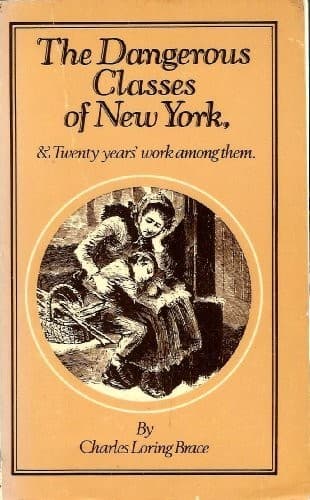
The Dangerous Classes of New York, and Twenty Years' Work Among ThemBrace, Charles Loring
History
The Dangerous Classes of New York, and Twenty Years' Work Among Them
Brace, Charles Loring
Child welfare -- New York (State) -- New York; New York (N.Y.) -- Social conditions; Poor -- New York (State) -- New York
Among the large class of poor and ignorant girls in a large city who are
always just on the line between virtue and vice, who can say how many
more would be plunged into this abyss of misery by an apparent legal
approval or recognition of the offense through a system of license?
Among the thousand young men who are under incessant temptations in a
city like this, who can say how many are saved by the consciousness that
this offense is looked upon both by morality and law as an offense, and
is not even recognized as permissible and legal? A city license
constitutes a profession of prostitutes. The law and opinion recognize
them. The evil becomes more fixed by its public recognition.
It is true that prostitution will always, in all probability, attend
civilization; but so will all other sins and offenses. It may be
possible, however, to diminish and control it. It is already immensely
checked in this country, as compared with continental countries, partly
through economical and partly through moral causes. It has been
diminished among the daughters of the lowest poor in this city by the
"Industrial Schools." Why should it be increased and established by
legal recognition?
We admit that the present condition of the whole matter in New York is
terrible. The humanity and science which ought to minister to the
prostitute as freely as to any other class, are refused to her by the
public, unless she apply as a pauper. The consequence is, that the
fearful diseases which follow this offense, like avenging Furies, have
spread through not only this class of women, but have been communicated
to the virtuous and innocent, and are undermining the health of society.
This fact is notorious to physicians.
Now we think a reasonable "middle course" might be pursued in this
matter; that, for instance, greater conveniences for medical attendance
and advice in the city (and not on Blackwell's Island) might be afforded
by our authorities to this class, both as a matter of humanity and as a
safeguard to the public health. If there was a hospital or a dispensary
for such cases within the city, it would avoid the disgrace and
publicity of each patient reporting herself to the court as a pauper,
and then being sent to the Island Hospital. Hundreds more would present
themselves for attendance and treatment than do now, and the public
health be proportionately improved. No moral sanction would thus be
given to this demoralizing and degrading business. The simple duties of
humanity would be performed.
Public-domain text, read in full here on John Shaqi.
Reviews
Reviews
No reviews yet
Be the first to share your thoughts on this work.
Elsewhere in the archive
Join the Discussion
Join the discussion
Sign in to leave a comment or review.
Sign InorCreate an account