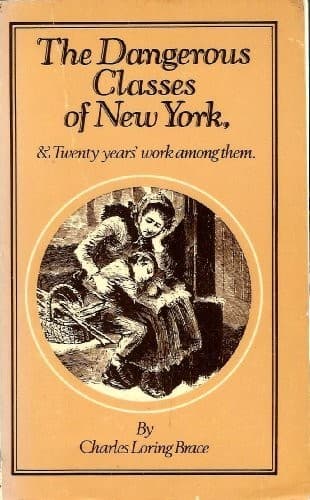
The Dangerous Classes of New York, and Twenty Years' Work Among ThemBrace, Charles Loring
History
The Dangerous Classes of New York, and Twenty Years' Work Among Them
Brace, Charles Loring
Child welfare -- New York (State) -- New York; New York (N.Y.) -- Social conditions; Poor -- New York (State) -- New York
The peculiar value of our common experience in this School was, that we
were enabled through so many years to follow carefully the results of
the School on a large class of very destitute little girls. We know
personally what was here accomplished. A very hopeful feature appeared
soon in the work. The children rose above the condition of their
parents; sometimes they improved, by their own increasing neatness and
good behavior, the habits and appearance of their fathers and mothers.
More often they became ashamed of their paternal piggeries and nasty
dens, and were glad to get away to more decent homes or new occupations.
One great means of influence here was, as in the other Schools, through
the regular assistance of volunteer teachers, the ladies of the
Association.
It happened that there was among them more of a certain tenacity of
character, of the old Puritan faithfulness, than was manifested by some
of our co-laborers; having put their hands to the plow, they never
thought of turning back. They gave time and labor, and money freely, and
they continued at their posts year after year.
The children felt their refining and elevating influence. We soon found
that the daughters of the drunkards did not follow their mothers'
footsteps, simply because they had acquired higher tastes. We hardly
ever knew of one who indulged in drinking; indeed, one old red-faced
tippler, Mrs. McK., who was the best chore-woman on the Hill when sober,
eventually was entirely reformed by her children. No child seemed to
fall back into the degradation of the parents. And recalling now the
rank foul soil from which so many sweet flowers seemed to spring, one
can only wonder and be grateful that efforts so imperfect bore such
harvest.
I remember the F. family--such a cheery, healthy-looking family living
in a damp, dark basement, and almost always half-starved, wretchedly
poor, but very industrious! The youngest daughter passed through our
School, and is now becoming a teacher; another married a mechanic (these
girls never marry day-laborers). Still another proved herself a heroine.
We sent her as nursery-maid to a family, and as they were all sailing
down the Hudson in the _St. John,_ the boiler burst; amid the horrible
confusion and panic where so many perished, this girl had the courage to
rush through the steam and boiling water, and save the three children
entrusted to her charge. Of course, after this, she was no longer a
servant, but a "sister beloved" in the family. A gentleman of fortune,
attracted by her appearance and intelligence, ultimately married her. He
died, and she was left with a nice fortune. She bore her change of
fortune beautifully.
The following is another similar incident from our Journal:
A ROMANTIC INCIDENT IN AN INDUSTRIAL SCHOOL.
Public-domain text, read in full here on John Shaqi.
Reviews
Reviews
No reviews yet
Be the first to share your thoughts on this work.
Elsewhere in the archive
Join the Discussion
Join the discussion
Sign in to leave a comment or review.
Sign InorCreate an account