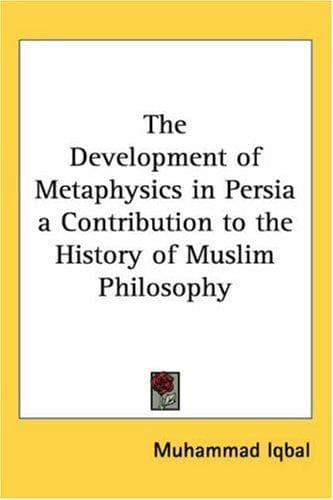
In order to understand whether the soul has an independent existence, we
should examine the nature of human knowledge. It is the essential
property of matter that it cannot assume two different forms
simultaneously. To transform a silver spoon into a silver glass, it is
necessary that the spoon-form as such, should cease to exist. This
property is common to all bodies, and a body that lacks it cannot be
regarded as a body. Now when we examine the nature of perception, we see
that there is a principle in man which, in so far as it is able to know
more than one thing at a time, can assume, so to say, many different
forms simultaneously. This principle cannot be matter, since it lacks
the fundamental property of matter. The essence of the soul consists in
the power of perceiving a number of objects at one and the same moment
of time. But it may be objected that the soul-principle may be either
material in its essence, or a function of matter. There are, however,
reasons to show that the soul cannot be a function of matter.
(a). A thing which assumes different forms and states, cannot itself be
one of those forms and states. A body which receives different colors
should be, in its own nature, colorless. The soul, in its perception of
external objects, assumes, as it were, various forms and states; it,
therefore, cannot be regarded as one of those forms. Ibn Maskawaih
seems to give no countenance to the contemporary Faculty-Psychology; to
him different mental states are various transformations of the soul
itself.
(b). The attributes are constantly changing; there must be beyond the
sphere of change, some permanent substratum which is the foundation of
personal identity.
Having shown that the soul cannot be regarded as a function of matter,
Ibn Maskawaih proceeds to prove that it is essentially immaterial. Some
of his arguments may be noticed:--
1. The senses, after they have perceived a strong stimulus, cannot, for
a certain amount of time, perceive a weaker stimulus. It is, however,
quite different with the mental act of cognition.
2. When we reflect on an abstruse subject, we endeavour to completely
shut our eyes to the objects around us, which we regard as so many
hindrances in the way of spiritual activity. If the soul is material in
its essence, it need not, in order to secure unimpeded activity, escape
from the world of matter.
3. The perception of a strong stimulus weakens and sometimes injures the
sense. The intellect, on the other hand, grows in strength with the
knowledge of ideas and general notions.
4. Physical weakness due to old age, does not affect mental vigour.
5. The soul can conceive certain propositions which have no connection
with the sense-data. The senses, for instance, cannot perceive that two
contradictories cannot exist together.
Public-domain text, read in full here on John Shaqi.
Reviews
Reviews
No reviews yet
Be the first to share your thoughts on this work.
Join the Discussion
Join the discussion
Sign in to leave a comment or review.
Sign InorCreate an account