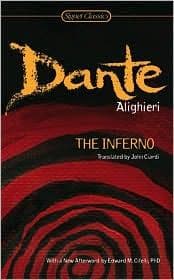
The Divine Comedy of Dante Alighieri: The InfernoDante Alighieri
ReligionJewish
The Divine Comedy of Dante Alighieri: The Inferno
Dante Alighieri
Epic poetry, Italian -- Translations into English; Hell; Italian poetry -- To 1400 -- Translations into English
Measures enough had been passed towards the close of the century with a
view to curb the insolence of the magnates; but the difficulty was to
get them put in force. At length, in 1294, they, with many additional
reforms, were embodied in the celebrated Ordinances of Justice. These
for long were counted back to as the Great Charter of Florence--a Great
Charter defining the popular rights and the disabilities of the
baronage. Punishments of special severity were enacted for nobles who
should wrong a plebeian, and the whole of a family or clan was made
responsible for the crimes and liabilities of its several members. The
smaller tradesmen were conciliated by being admitted to a share in
political influence. If serfage was already abolished in the State of
Florence, it was the Ordinances which made it possible for the serf to
use his liberty.[72] But the greatest blow dealt to the nobles by the
new laws was their exclusion, as nobles, from all civil and political
offices. These they could hold only by becoming members of one of the
trade guilds.[73] And to deprive a citizen of his rights it was enough
to inscribe his name in the list of magnates.
It is not known in what year Dante became a member of the Guild of
Apothecaries. Without much reason it has been assumed that he was one of
the nobles who took advantage of the law of 1294. But there is no
evidence that in his time the Alighieri ranked as magnates, and much
ground for believing that for some considerable time past they had
belonged to the order of full citizens.
Public-domain text, read in full here on John Shaqi.
Reviews
Reviews
No reviews yet
Be the first to share your thoughts on this work.
Join the Discussion
Join the discussion
Sign in to leave a comment or review.
Sign InorCreate an account