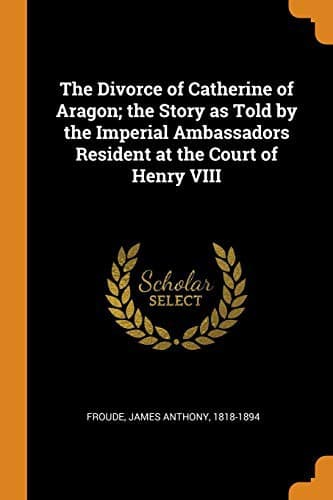
The Divorce of Catherine of Aragon: The Story as Told by the Imperial Ambassadors Resident at the Court of Henry VIIIFroude, James Anthony
History
The Divorce of Catherine of Aragon: The Story as Told by the Imperial Ambassadors Resident at the Court of Henry VIII
Froude, James Anthony
Catharine, of Aragon, Queen, consort of Henry VIII, King of England, 1485-1536 -- Divorce; Divorce -- Great Britain -- History -- 16th century; Great Britain -- History -- Henry VIII, 1509-1547 -- Biography; Great Britain -- Kings and rulers -- Biography; Henry VIII, King of England, 1491-1547 -- Di
Before accepting a conclusion so disgraceful--before consigning the men
who achieved so great a victory, and risked and lost their lives in the
battle, to final execration--it is at least permissible to pause. The
difficulty can only be made light of by impatience, by prejudice, or by
want of thought. To me at any rate, who wished to discover what the real
history of the Reformation had been, it seemed so considerable, that,
dismissing the polemical invectives of later writers, I turned to the
accounts of their conduct, which had been left behind by the authors of it
themselves. Among the fortunate anomalies of the situation, Henry departed
from previous custom in holding annual parliaments. At every step which
he took, either in the rearrangement of the realm or in his own domestic
confusions, he took the Lords and Commons into his council, and ventured
nothing without their consent. The preambles of the principal statutes
contain a narrative clear and precise of the motives of everything that he
did--a narrative which at least may have been a true one, which was not
put forward as a defence, but was a mere explanation of acts which on the
surface seemed violent and arbitrary. If the explanation is correct, it
shows us a time of complications and difficulties, which, on the whole,
were successfully encountered. It shows us severe measures severely
executed, but directed to public and necessary purpose, involving no
sycophancy or baseness, no mean subservience to capricious tyranny, but
such as were the natural safeguards during a dangerous convulsion, or
remedies of accidents incidental to hereditary monarchy. The story told is
clear and distinct; pitiless, but not dishonourable. Between the lines can
be read the storm of popular passions, the beating of the national heart
when it was stirred to its inmost depths. We see established institutions
rooted out, idols overthrown, and injured worshippers exasperated to fury;
the air, as was inevitable at such a crisis, full of flying rumours, some
lies, some half lies with fragments of truth attaching to them, bred of
malice or dizzy brains, the materials out of which the popular tradition
has been built. It was no insular revolution. The stake played for was the
liberty of mankind. All Europe was watching England, for England was the
hinge on which the fate of the Reformation turned. Could it be crushed in
England, the Catholics were assured of universal victory, and therefore
tongues and pens were busy everywhere throughout Christendom, Catholic
imagination representing Henry as an incarnate Satan, for which, it must
be admitted, his domestic misadventures gave them tempting opportunities.
So thick fell the showers of calumny, that, bold as he was, he at times
himself winced under it. He complained to Charles V. of the libels
circulated about him in France and Flanders. Charles, too, had suffered in
the same way. He answered, humorously, that "if kings gave occasion to be
Reviews
Reviews
No reviews yet
Be the first to share your thoughts on this work.
Join the Discussion
Join the discussion
Sign in to leave a comment or review.
Sign InorCreate an account