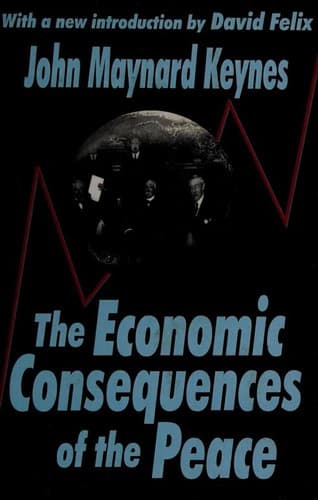
The Economic Consequences of the PeaceKeynes, John Maynard
History
The Economic Consequences of the Peace
Keynes, John Maynard
Economic history -- 1918-1945; Treaty of Versailles (1919 June 28); World War, 1914-1918 -- Economic aspects
that is $200,000,000 annually.
These factors have already reduced Germany's annual surplus to less than
the $500,000,000 at which we arrived on other grounds as the maximum of
her annual payments. But even if the rejoinder be made, that we have not
yet allowed for the lowering of the standard of life and comfort in
Germany which may reasonably be imposed on a defeated enemy,[133] there
is still a fundamental fallacy in the method of calculation. An annual
surplus available for home investment can only be converted into a
surplus available for export abroad by a radical change in the kind of
work performed. Labor, while it may be available and efficient for
domestic services in Germany, may yet be able to find no outlet in
foreign trade. We are back on the same question which faced us in our
examination of the export trade--in _what_ export trade is German labor
going to find a greatly increased outlet? Labor can only he diverted
into new channels with loss of efficiency, and a large expenditure of
capital. The annual surplus which German labor can produce for capital
improvements at home is no measure, either theoretically or practically,
of the annual tribute which she can pay abroad.
IV. _The Reparation Commission_.
This body is so remarkable a construction and may, if it functions at
all, exert so wide an influence on the life of Europe, that its
attributes deserve a separate examination.
There are no precedents for the indemnity imposed on Germany under the
present Treaty; for the money exactions which formed part of the
settlement after previous wars have differed in two fundamental respects
from this one. The sum demanded has been determinate and has been
measured in a lump sum of money; and so long as the defeated party was
meeting the annual instalments of cash no consequential interference was
necessary.
But for reasons already elucidated, the exactions in this case are not
yet determinate, and the sum when fixed will prove in excess of what can
be paid in cash and in excess also of what can be paid at all. It was
necessary, therefore, to set up a body to establish the bill of claim,
to fix the mode of payment, and to approve necessary abatements and
delays. It was only possible to place this body in a position to exact
the utmost year by year by giving it wide powers over the internal
economic life of the enemy countries, who are to be treated henceforward
as bankrupt estates to be administered by and for the benefit of the
creditors. In fact, however, its powers and functions have been enlarged
even beyond what was required for this purpose, and the Reparation
Commission has been established as the final arbiter on numerous
economic and financial issues which it was convenient to leave unsettled
in the Treaty itself.[134]
Public-domain text, read in full here on John Shaqi.
Reviews
Reviews
No reviews yet
Be the first to share your thoughts on this work.
Elsewhere in the archive
Join the Discussion
Join the discussion
Sign in to leave a comment or review.
Sign InorCreate an account