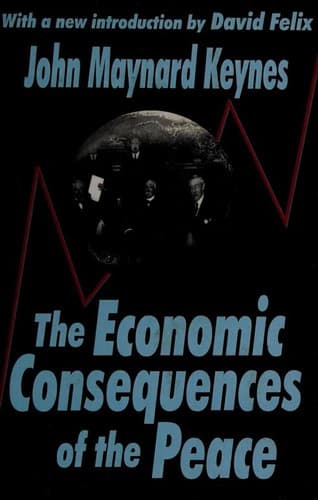
The Economic Consequences of the PeaceKeynes, John Maynard
History
The Economic Consequences of the Peace
Keynes, John Maynard
Economic history -- 1918-1945; Treaty of Versailles (1919 June 28); World War, 1914-1918 -- Economic aspects
Apart from other aspects of the transaction, I believe that the
campaign for securing out of Germany the general costs of the war was
one of the most serious acts of political unwisdom for which our
statesmen have ever been responsible. To what a different future Europe
might have looked forward if either Mr. Lloyd George or Mr. Wilson had
apprehended that the most serious of the problems which claimed their
attention were not political or territorial but financial and economic,
and that the perils of the future lay not in frontiers or sovereignties
but in food, coal, and transport. Neither of them paid adequate
attention to these problems at any stage of the Conference. But in any
event the atmosphere for the wise and reasonable consideration of them
was hopelessly befogged by the commitments of the British delegation on
the question of Indemnities. The hopes to which the Prime Minister had
given rise not only compelled him to advocate an unjust and unworkable
economic basis to the Treaty with Germany, but set him at variance with
the President, and on the other hand with competing interests to those
of France and Belgium. The clearer it became that but little could be
expected from Germany, the more necessary it was to exercise patriotic
greed and "sacred egotism" and snatch the bone from the juster claims
and greater need of France or the well-founded expectations of Belgium.
Yet the financial problems which were about to exercise Europe could not
be solved by greed. The possibility of _their_ cure lay in magnanimity.
Public-domain text, read in full here on John Shaqi.
Reviews
Reviews
No reviews yet
Be the first to share your thoughts on this work.
Elsewhere in the archive
Join the Discussion
Join the discussion
Sign in to leave a comment or review.
Sign InorCreate an account