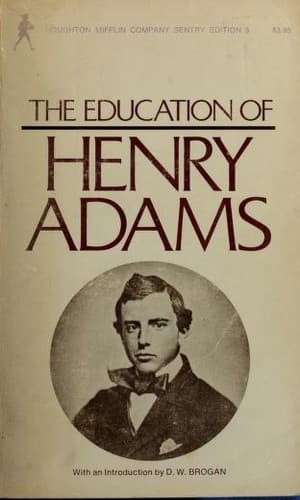
Adams, Henry, 1838-1918; Historians -- United States -- Biography
Compared with him, figures like Hayward, or Delane, or
Venables, or Henry Reeve were quite secondary, but William E. Forster
stood in a different class. Forster had nothing whatever to do with May
Fair. Except in being a Yorkshireman he was quite the opposite of
Milnes. He had at that time no social or political position; he never
had a vestige of Milnes's wit or variety; he was a tall, rough,
ungainly figure, affecting the singular form of self-defense which the
Yorkshiremen and Lancashiremen seem to hold dear--the exterior
roughness assumed to cover an internal, emotional, almost sentimental
nature. Kindly he had to be, if only by his inheritance from a Quaker
ancestry, but he was a Friend one degree removed. Sentimental and
emotional he must have been, or he could never have persuaded a
daughter of Dr. Arnold to marry him. Pure gold, without a trace of base
metal; honest, unselfish, practical; he took up the Union cause and
made himself its champion, as a true Yorkshireman was sure to do,
partly because of his Quaker anti-slavery convictions, and partly
because it gave him a practical opening in the House. As a new member,
he needed a field.
Diffidence was not one of Forster's weaknesses. His practical
sense and his personal energy soon established him in leadership, and
made him a powerful champion, not so much for ornament as for work.
With such a manager, the friends of the Union in England began to take
heart. Minister Adams had only to look on as his true champions, the
heavy-weights, came into action, and even the private secretary caught
now and then a stray gleam of encouragement as he saw the ring begin to
clear for these burly Yorkshiremen to stand up in a prize-fight likely
to be as brutal as ever England had known. Milnes and Forster were not
exactly light-weights, but Bright and Cobden were the hardest hitters
in England, and with them for champions the Minister could tackle even
Lord Palmerston without much fear of foul play.
In society John Bright and Richard Cobden were never seen, and
even in Parliament they had no large following. They were classed as
enemies of order,--anarchists,--and anarchists they were if hatred of
the so-called established orders made them so. About them was no sort
of political timidity. They took bluntly the side of the Union against
Palmerston whom they hated. Strangers to London society, they were at
home in the American Legation, delightful dinner-company, talking
always with reckless freedom. Cobden was the milder and more
persuasive; Bright was the more dangerous to approach; but the private
secretary delighted in both, and nourished an ardent wish to see them
talk the same language to Lord John Russell from the gangway of the
House.
Public-domain text, read in full here on John Shaqi.
Reviews
Reviews
No reviews yet
Be the first to share your thoughts on this work.
Elsewhere in the archive
Join the Discussion
Join the discussion
Sign in to leave a comment or review.
Sign InorCreate an account