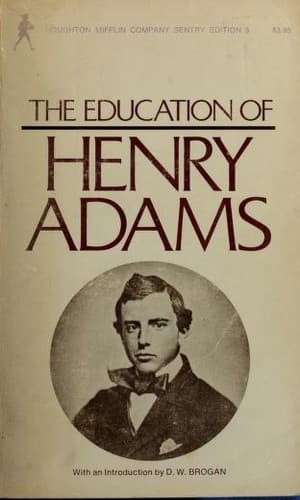
Adams, Henry, 1838-1918; Historians -- United States -- Biography
With four such allies as these, Minister Adams stood no longer
quite helpless. For the second time the British Ministry felt a little
ashamed of itself after the Trent Affair, as well it might, and
disposed to wait before moving again. Little by little, friends
gathered about the Legation who were no fair-weather companions. The
old anti-slavery, Exeter Hall, Shaftesbury clique turned out to be an
annoying and troublesome enemy, but the Duke of Argyll was one of the
most valuable friends the Minister found, both politically and
socially, and the Duchess was as true as her mother. Even the private
secretary shared faintly in the social profit of this relation, and
never forgot dining one night at the Lodge, and finding himself after
dinner engaged in instructing John Stuart Mill about the peculiar
merits of an American protective system. In spite of all the
probabilities, he convinced himself that it was not the Duke's claret
which led him to this singular form of loquacity; he insisted that it
was the fault of Mr. Mill himself who led him on by assenting to his
point of view. Mr. Mill took no apparent pleasure in dispute, and in
that respect the Duke would perhaps have done better; but the secretary
had to admit that though at other periods of life he was sufficiently
and even amply snubbed by Englishmen, he could never recall a single
occasion during this trying year, when he had to complain of rudeness.
Friendliness he found here and there, but chiefly among his
elders; not among fashionable or socially powerful people, either men
or women; although not even this rule was quite exact, for Frederick
Cavendish's kindness and intimate relations made Devonshire House
almost familiar, and Lyulph Stanley's ardent Americanism created a
certain cordiality with the Stanleys of Alderley whose house was one of
the most frequented in London. Lorne, too, the future Argyll, was
always a friend. Yet the regular course of society led to more literary
intimacies. Sir Charles Trevelyan's house was one of the first to which
young Adams was asked, and with which his friendly relations never
ceased for near half a century, and then only when death stopped them.
Sir Charles and Lady Lyell were intimates. Tom Hughes came into close
alliance. By the time society began to reopen its doors after the death
of the Prince Consort, even the private secretary occasionally saw a
face he knew, although he made no more effort of any kind, but silently
waited the end. Whatever might be the advantages of social relations to
his father and mother, to him the whole business of diplomacy and
society was futile. He meant to go home.
CHAPTER IX
FOES OR FRIENDS (1862)
Public-domain text, read in full here on John Shaqi.
Reviews
Reviews
No reviews yet
Be the first to share your thoughts on this work.
Elsewhere in the archive
Join the Discussion
Join the discussion
Sign in to leave a comment or review.
Sign InorCreate an account