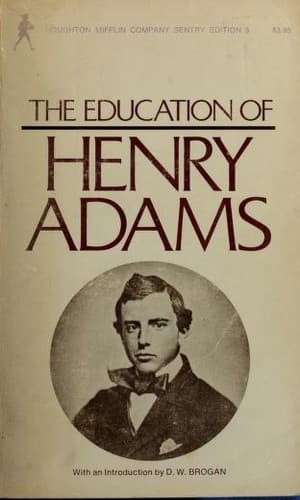
Adams, Henry, 1838-1918; Historians -- United States -- Biography
... I have written to Johnny my reasons for thinking it
decidedly premature. I, however, suspect you will settle to do
so. Pam., Johnny, and Gladstone would be in favor of it, and
probably Newcastle. I do not know about the others. It appears
to me a great mistake....
Out of a Cabinet of a dozen members, Granville, the best
informed of them all, could pick only three who would favor
recognition. Even a private secretary thought he knew as much as this,
or more. Ignorance was not confined to the young and insignificant, nor
were they the only victims of blindness. Granville's letter made only
one point clear. He knew of no fixed policy or conspiracy. If any
existed, it was confined to Palmerston, Russell, Gladstone, and perhaps
Newcastle. In truth, the Legation knew, then, all that was to be known,
and the true fault of education was to suspect too much.
By that time, October 3, news of Antietam and of Lee's retreat
into Virginia had reached London. The Emancipation Proclamation
arrived. Had the private secretary known all that Granville or
Palmerston knew, he would surely have thought the danger past, at least
for a time, and any man of common sense would have told him to stop
worrying over phantoms. This healthy lesson would have been worth much
for practical education, but it was quite upset by the sudden rush of a
new actor upon the stage with a rhapsody that made Russell seem sane,
and all education superfluous.
This new actor, as every one knows, was William Ewart
Gladstone, then Chancellor of the Exchequer. If, in the domain of the
world's politics, one point was fixed, one value ascertained, one
element serious, it was the British Exchequer; and if one man lived who
could be certainly counted as sane by overwhelming interest, it was the
man who had in charge the finances of England. If education had the
smallest value, it should have shown its force in Gladstone, who was
educated beyond all record of English training. From him, if from no
one else, the poor student could safely learn.
Here is what he learned! Palmerston notified Gladstone,
September 24, of the proposed intervention: "If I am not mistaken, you
would be inclined to approve such a course." Gladstone replied the next
day: "He was glad to learn what the Prime Minister had told him; and
for two reasons especially he desired that the proceedings should be
prompt: the first was the rapid progress of the Southern arms and the
extension of the area of Southern feeling; the second was the risk of
violent impatience in the cotton-towns of Lancashire such as would
prejudice the dignity and disinterestedness of the proffered mediation."
Public-domain text, read in full here on John Shaqi.
Reviews
Reviews
No reviews yet
Be the first to share your thoughts on this work.
Elsewhere in the archive
Join the Discussion
Join the discussion
Sign in to leave a comment or review.
Sign InorCreate an account