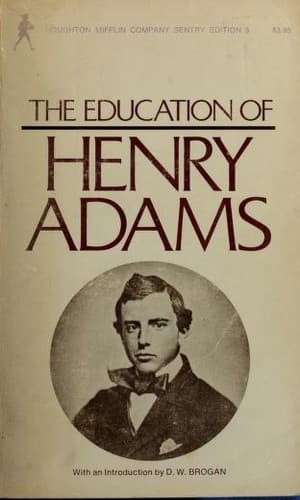
Adams, Henry, 1838-1918; Historians -- United States -- Biography
Even after forty years, most people would refuse to believe it;
they would still insist that Gladstone, Russell, and Palmerston were
true villains of melodrama. The evidence against Gladstone in special
seemed overwhelming. The word "must" can never be used by a responsible
Minister of one Government towards another, as Gladstone used it. No
one knew so well as he that he and his own officials and friends at
Liverpool were alone "making" a rebel navy, and that Jefferson Davis
had next to nothing to do with it. As Chancellor of the Exchequer he
was the Minister most interested in knowing that Palmerston, Russell,
and himself were banded together by mutual pledge to make the
Confederacy a nation the next week, and that the Southern leaders had
as yet no hope of "making a nation" but in them. Such thoughts occurred
to every one at the moment and time only added to their force. Never in
the history of political turpitude had any brigand of modern
civilization offered a worse example. The proof of it was that it
outraged even Palmerston, who immediately put up Sir George Cornewall
Lewis to repudiate the Chancellor of the Exchequer, against whom he
turned his press at the same time. Palmerston had no notion of letting
his hand be forced by Gladstone.
Russell did nothing of the kind; if he agreed with Palmerston,
he followed Gladstone. Although he had just created a new evangel of
non-intervention for Italy, and preached it like an apostle, he
preached the gospel of intervention in America as though he were a
mouthpiece of the Congress of Vienna. On October 13, he issued his call
for the Cabinet to meet, on October 23, for discussion of the "duty of
Europe to ask both parties, in the most friendly and conciliatory
terms, to agree to a suspension of arms." Meanwhile Minister Adams,
deeply perturbed and profoundly anxious, would betray no sign of alarm,
and purposely delayed to ask explanation. The howl of anger against
Gladstone became louder every day, for every one knew that the Cabinet
was called for October 23, and then could not fail to decide its policy
about the United States. Lord Lyons put off his departure for America
till October 25 expressly to share in the conclusions to be discussed
on October 23. When Minister Adams at last requested an interview,
Russell named October 23 as the day. To the last moment every act of
Russell showed that, in his mind, the intervention was still in doubt.
When Minister Adams, at the interview, suggested that an
explanation was due him, he watched Russell with natural interest, and
reported thus:
Public-domain text, read in full here on John Shaqi.
Reviews
Reviews
No reviews yet
Be the first to share your thoughts on this work.
Elsewhere in the archive
Join the Discussion
Join the discussion
Sign in to leave a comment or review.
Sign InorCreate an account