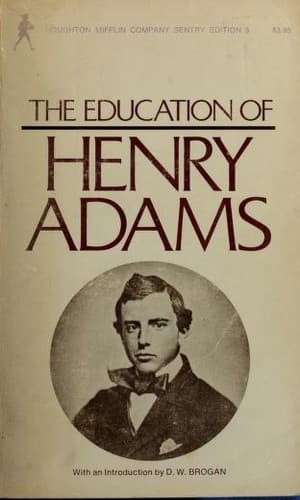
Adams, Henry, 1838-1918; Historians -- United States -- Biography
Thus, whatever the theory, the action of diplomacy had to be
the same. Minister Adams was obliged to imply collusion between Russell
and the rebels. He could not even stop at criminal negligence. If, by
an access of courtesy, the Minister were civil enough to admit that the
escape of the Alabama had been due to criminal negligence, he could
make no such concession in regard to the ironclad rams which the Lairds
were building; for no one could be so simple as to believe that two
armored ships-of-war could be built publicly, under the eyes of the
Government, and go to sea like the Alabama, without active and
incessant collusion. The longer Earl Russell kept on his mask of
assumed ignorance, the more violently in the end, the Minister would
have to tear it off. Whatever Mr. Adams might personally think of Earl
Russell, he must take the greatest possible diplomatic liberties with
him if this crisis were allowed to arrive.
As the spring of 1863 drew on, the vast field cleared itself
for action. A campaign more beautiful--better suited for training the
mind of a youth eager for training--has not often unrolled itself for
study, from the beginning, before a young man perched in so commanding
a position. Very slowly, indeed, after two years of solitude, one began
to feel the first faint flush of new and imperial life. One was
twenty-five years old, and quite ready to assert it; some of one's
friends were wearing stars on their collars; some had won stars of a
more enduring kind. At moments one's breath came quick. One began to
dream the sensation of wielding unmeasured power. The sense came, like
vertigo, for an instant, and passed, leaving the brain a little dazed,
doubtful, shy. With an intensity more painful than that of any
Shakespearean drama, men's eyes were fastened on the armies in the
field. Little by little, at first only as a shadowy chance of what
might be, if things could be rightly done, one began to feel that,
somewhere behind the chaos in Washington power was taking shape; that
it was massed and guided as it had not been before. Men seemed to have
learned their business--at a cost that ruined--and perhaps too late. A
private secretary knew better than most people how much of the new
power was to be swung in London, and almost exactly when; but the
diplomatic campaign had to wait for the military campaign to lead. The
student could only study.
Life never could know more than a single such climax. In that
form, education reached its limits. As the first great blows began to
fall, one curled up in bed in the silence of night, to listen with
incredulous hope. As the huge masses struck, one after another, with
the precision of machinery, the opposing mass, the world shivered. Such
development of power was unknown. The magnificent resistance and the
return shocks heightened the suspense. During the July days Londoners
were stupid with unbelief. They were learning from the Yankees how to
fight.
Public-domain text, read in full here on John Shaqi.
Reviews
Reviews
No reviews yet
Be the first to share your thoughts on this work.
Elsewhere in the archive
Join the Discussion
Join the discussion
Sign in to leave a comment or review.
Sign InorCreate an account