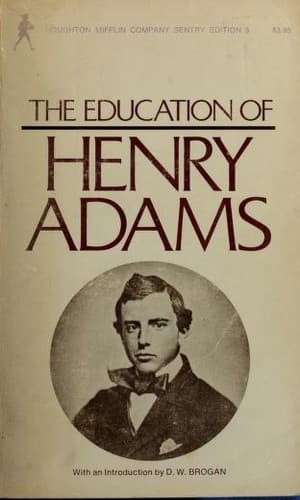
Adams, Henry, 1838-1918; Historians -- United States -- Biography
Of the obstinate effort to bring about an armed intervention,
on the lines marked out by Russell's letter to Palmerston from Gotha,
17 September, 1862, nothing could be said beyond Gladstone's plea in
excuse for his speech in pursuance of the same effort, that it was "the
most singular and palpable error," "the least excusable," "a mistake of
incredible grossness," which passed defence; but while Gladstone threw
himself on the mercy of the public for his speech, he attempted no
excuse for Lord Russell who led him into the "incredible grossness" of
announcing the Foreign Secretary's intent. Gladstone's offence,
"singular and palpable," was not the speech alone, but its cause--the
policy that inspired the speech. "I weakly supposed ... I really,
though most strangely, believed that it was an act of friendliness."
Whatever absurdity Gladstone supposed, Russell supposed nothing of the
sort. Neither he nor Palmerston "most strangely believed" in any
proposition so obviously and palpably absurd, nor did Napoleon delude
himself with philanthropy. Gladstone, even in his confession, mixed up
policy, speech, motives, and persons, as though he were trying to
confuse chiefly himself.
There Gladstone's activity seems to have stopped. He did not
reappear in the matter of the rams. The rebel influence shrank in 1863,
as far as is known, to Lord Russell alone, who wrote on September 1
that he could not interfere in any way with those vessels, and thereby
brought on himself Mr. Adams's declaration of war on September 5. A
student held that, in this refusal, he was merely following his policy
of September, 1862, and of every step he had taken since 1861.
Public-domain text, read in full here on John Shaqi.
Reviews
Reviews
No reviews yet
Be the first to share your thoughts on this work.
Elsewhere in the archive
Join the Discussion
Join the discussion
Sign in to leave a comment or review.
Sign InorCreate an account