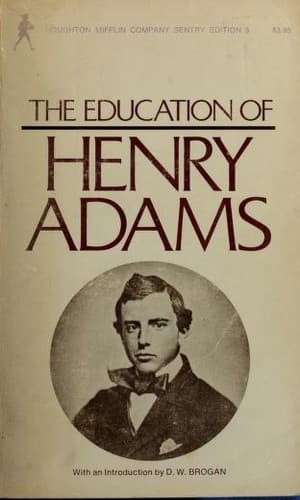
Adams, Henry, 1838-1918; Historians -- United States -- Biography
Lamar liked to talk of his brief career in diplomacy, but he
never spoke of Mason. He never alluded to Confederate management or
criticised Jefferson Davis's administration. The subject that amused
him was his English allies. At that moment--the early summer of
1863--the rebel party in England were full of confidence, and felt
strong enough to challenge the American Legation to a show of power.
They knew better than the Legation what they could depend upon: that
the law officers and commissioners of customs at Liverpool dared not
prosecute the ironclad ships; that Palmerston, Russell, and Gladstone
were ready to recognize the Confederacy; that the Emperor Napoleon
would offer them every inducement to do it. In a manner they owned
Liverpool and especially the firm of Laird who were building their
ships. The political member of the Laird firm was Lindsay, about whom
the whole web of rebel interests clung--rams, cruisers, munitions, and
Confederate loan; social introductions and parliamentary tactics. The
firm of Laird, with a certain dignity, claimed to be champion of
England's navy; and public opinion, in the summer of 1863, still
inclined towards them.
Never was there a moment when eccentricity, if it were a force,
should have had more value to the rebel interest; and the managers must
have thought so, for they adopted or accepted as their champion an
eccentric of eccentrics; a type of 1820; a sort of Brougham of
Sheffield, notorious for poor judgment and worse temper. Mr. Roebuck
had been a tribune of the people, and, like tribunes of most other
peoples, in growing old, had grown fatuous. He was regarded by the
friends of the Union as rather a comical personage--a favorite subject
for Punch to laugh at--with a bitter tongue and a mind enfeebled even
more than common by the political epidemic of egotism. In all England
they could have found no opponent better fitted to give away his own
case. No American man of business would have paid him attention; yet.
the Lairds, who certainly knew their own affairs best, let Roebuck
represent them and take charge of their interests.
Public-domain text, read in full here on John Shaqi.
Reviews
Reviews
No reviews yet
Be the first to share your thoughts on this work.
Elsewhere in the archive
Join the Discussion
Join the discussion
Sign in to leave a comment or review.
Sign InorCreate an account