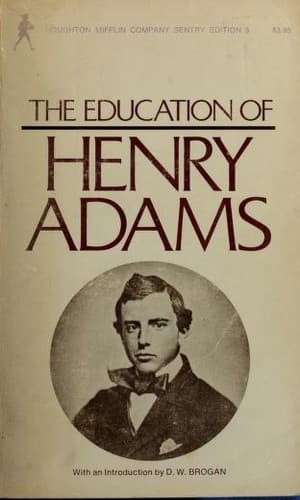
Adams, Henry, 1838-1918; Historians -- United States -- Biography
This eccentricity did not mean strength. The proof of it was
the mismanagement of the rebel interests. No doubt the first cause of
this trouble lay in the Richmond Government itself. No one understood
why Jefferson Davis chose Mr. Mason as his agent for London at the same
time that he made so good a choice as Mr. Slidell for Paris. The
Confederacy had plenty of excellent men to send to London, but few who
were less fitted than Mason. Possibly Mason had a certain amount of
common sense, but he seemed to have nothing else, and in London society
he counted merely as one eccentric more. He enjoyed a great
opportunity; he might even have figured as a new Benjamin Franklin with
all society at his feet; he might have roared as lion of the season and
made the social path of the American Minister almost impassable; but
Mr. Adams had his usual luck in enemies, who were always his most
valuable allies if his friends only let them alone. Mason was his
greatest diplomatic triumph. He had his collision with Palmerston; he
drove Russell off the field; he swept the board before Cockburn; he
overbore Slidell; but he never lifted a finger against Mason, who
became his bulwark of defence.
Possibly Jefferson Davis and Mr. Mason shared two defects in
common which might have led them into this serious mistake. Neither
could have had much knowledge of the world, and both must have been
unconscious of humor. Yet at the same time with Mason, President Davis
sent out Slidell to France and Mr. Lamar to Russia. Some twenty years
later, in the shifting search for the education he never found, Adams
became closely intimate at Washington with Lamar, then Senator from
Mississippi, who had grown to be one of the calmest, most reasonable
and most amiable Union men in the United States, and quite unusual in
social charm. In 1860 he passed for the worst of Southern fire-eaters,
but he was an eccentric by environment, not by nature; above all his
Southern eccentricities, he had tact and humor; and perhaps this was a
reason why Mr. Davis sent him abroad with the others, on a futile
mission to St. Petersburg. He would have done better in London, in
place of Mason. London society would have delighted in him; his stories
would have won success; his manners would have made him loved; his
oratory would have swept every audience; even Monckton Milnes could
never have resisted the temptation of having him to breakfast between
Lord Shaftesbury and the Bishop of Oxford.
Public-domain text, read in full here on John Shaqi.
Reviews
Reviews
No reviews yet
Be the first to share your thoughts on this work.
Elsewhere in the archive
Join the Discussion
Join the discussion
Sign in to leave a comment or review.
Sign InorCreate an account