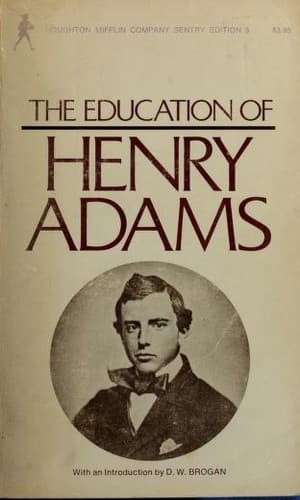
Adams, Henry, 1838-1918; Historians -- United States -- Biography
Lamar told the story in the spirit of a joke against himself
rather than against Roebuck; but such jokes must have been unpleasantly
common in the experience of the rebel agents. They were surrounded by
cranks of the worst English species, who distorted their natural
eccentricities and perverted their judgment. Roebuck may have been an
extreme case, since he was actually in his dotage, yet this did not
prevent the Lairds from accepting his lead, or the House from taking
him seriously. Extreme eccentricity was no bar, in England, to extreme
confidence; sometimes it seemed a recommendation; and unless it caused
financial loss, it rather helped popularity.
The question whether British eccentricity was ever strength
weighed heavily in the balance of education. That Roebuck should
mislead the rebel agents on so strange a point as that of Bright's
courage was doubly characteristic because the Southern people
themselves had this same barbaric weakness of attributing want of
courage to opponents, and owed their ruin chiefly to such ignorance of
the world. Bright's courage was almost as irrational as that of the
rebels themselves. Every one knew that he had the courage of a
prize-fighter. He struck, in succession, pretty nearly every man in
England that could be reached by a blow, and when he could not reach
the individual he struck the class, or when the class was too small for
him, the whole people of England. At times he had the whole country on
his back. He could not act on the defensive; his mind required attack.
Even among friends at the dinner-table he talked as though he were
denouncing them, or someone else, on a platform; he measured his
phrases, built his sentences, cumulated his effects, and pounded his
opponents, real or imagined. His humor was glow, like iron at dull
heat; his blow was elementary, like the thrash of a whale.
One day in early spring, March 26, 1863, the Minister requested
his private secretary to attend a Trades-Union Meeting at St. James's
Hall, which was the result of Professor Beesly's patient efforts to
unite Bright and the Trades-Unions on an American platform. The
secretary went to the meeting and made a report which reposes somewhere
on file in the State Department to this day, as harmless as such
reports should be; but it contained no mention of what interested young
Adams most--Bright's psychology. With singular skill and oratorical
power, Bright managed at the outset, in his opening paragraph, to
insult or outrage every class of Englishman commonly considered
respectable, and, for fear of any escaping, he insulted them repeatedly
under consecutive heads. The rhetorical effect was tremendous:--
Public-domain text, read in full here on John Shaqi.
Reviews
Reviews
No reviews yet
Be the first to share your thoughts on this work.
Elsewhere in the archive
Join the Discussion
Join the discussion
Sign in to leave a comment or review.
Sign InorCreate an account