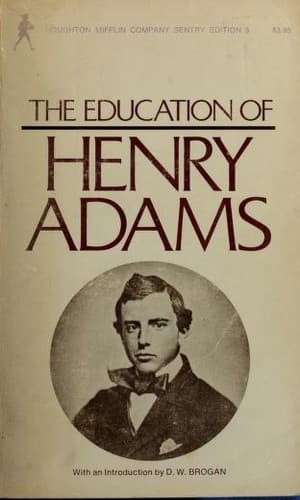
Adams, Henry, 1838-1918; Historians -- United States -- Biography
As soon as he could, he fled to England and once more took
refuge in the profound peace of Wenlock Abbey. Only the few remaining
monks, undisturbed by the brutalities of Henry VIII--three or four
young Englishmen--survived there, with Milnes Gaskell acting as Prior.
The August sun was warm; the calm of the Abbey was ten times secular;
not a discordant sound--hardly a sound of any sort except the cawing of
the ancient rookery at sunset--broke the stillness; and, after the
excitement of the last month, one felt a palpable haze of peace
brooding over the Edge and the Welsh Marches. Since the reign of
Pteraspis, nothing had greatly changed; nothing except the monks. Lying
on the turf the ground littered with newspapers, the monks studied the
war correspondence. In one respect Adams had succeeded in educating
himself; he had learned to follow a campaign.
While at Wenlock, he received a letter from President Eliot
inviting him to take an Assistant Professorship of History, to be
created shortly at Harvard College. After waiting ten or a dozen years
for some one to show consciousness of his existence, even a Terebratula
would be pleased and grateful for a compliment which implied that the
new President of Harvard College wanted his help; but Adams knew
nothing about history, and much less about teaching, while he knew more
than enough about Harvard College; and wrote at once to thank President
Eliot, with much regret that the honor should be above his powers. His
mind was full of other matters. The summer, from which he had expected
only amusement and social relations with new people, had ended in the
most intimate personal tragedy, and the most terrific political
convulsion he had ever known or was likely to know. He had failed in
every object of his trip. The Quarterlies had refused his best essay.
He had made no acquaintances and hardly picked up the old ones. He
sailed from Liverpool, on September 1, to begin again where he had
started two years before, but with no longer a hope of attaching
himself to a President or a party or a press. He was a free lance and
no other career stood in sight or mind. To that point education had
brought him.
Public-domain text, read in full here on John Shaqi.
Reviews
Reviews
No reviews yet
Be the first to share your thoughts on this work.
Elsewhere in the archive
Join the Discussion
Join the discussion
Sign in to leave a comment or review.
Sign InorCreate an account