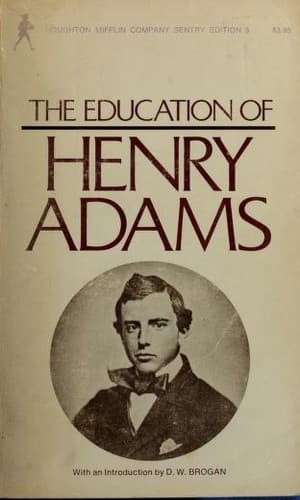
Adams, Henry, 1838-1918; Historians -- United States -- Biography
On May 13, he met the official announcement that England
recognized the belligerency of the Confederacy. This beginning of a new
education tore up by the roots nearly all that was left of Harvard
College and Germany. He had to learn--the sooner the better--that his
ideas were the reverse of truth; that in May, 1861, no one in
England--literally no one--doubted that Jefferson Davis had made or
would make a nation, and nearly all were glad of it, though not often
saying so. They mostly imitated Palmerston who, according to Mr.
Gladstone, "desired the severance as a diminution of a dangerous power,
but prudently held his tongue." The sentiment of anti-slavery had
disappeared. Lord John Russell, as Foreign Secretary, had received the
rebel emissaries, and had decided to recognize their belligerency
before the arrival of Mr. Adams in order to fix the position of the
British Government in advance. The recognition of independence would
then become an understood policy; a matter of time and occasion.
Whatever Minister Adams may have felt, the first effect of this
shock upon his son produced only a dullness of comprehension--a sort of
hazy inability to grasp the missile or realize the blow. Yet he
realized that to his father it was likely to be fatal. The chances were
great that the whole family would turn round and go home within a few
weeks. The horizon widened out in endless waves of confusion. When he
thought over the subject in the long leisure of later life, he grew
cold at the idea of his situation had his father then shown himself
what Sumner thought him to be--unfit for his post. That the private
secretary was unfit for his--trifling though it were--was proved by his
unreflecting confidence in his father. It never entered his mind that
his father might lose his nerve or his temper, and yet in a subsequent
knowledge of statesmen and diplomats extending over several
generations, he could not certainly point out another who could have
stood such a shock without showing it. He passed this long day, and
tedious journey to London, without once thinking of the possibility
that his father might make a mistake. Whatever the Minister thought,
and certainly his thought was not less active than his son's, he showed
no trace of excitement. His manner was the same as ever; his mind and
temper were as perfectly balanced; not a word escaped; not a nerve
twitched.
Public-domain text, read in full here on John Shaqi.
Reviews
Reviews
No reviews yet
Be the first to share your thoughts on this work.
Elsewhere in the archive
Join the Discussion
Join the discussion
Sign in to leave a comment or review.
Sign InorCreate an account