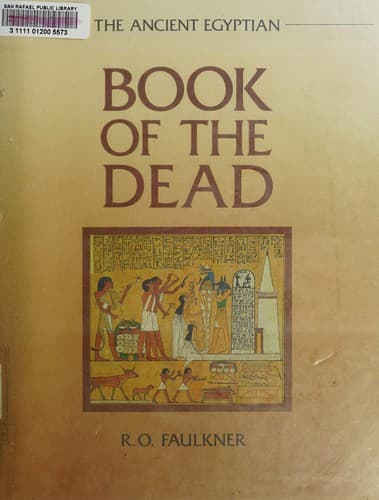
In his lecture[3] on the Book of the Dead, Renouf insists on the
difficulty of translating it: “Nothing can exceed the simplicity and the
brevity of the sentences; and yet the difficulties which a translator
has to overcome are very great. In the first place, the text is
extremely corrupt. The unsatisfactory condition of the text is owing to
different causes. The reasons which writers on Hebrew, Greek or Latin
palæography have enumerated for the purpose of accounting for mistakes
in manuscripts, apply with much greater force to the funereal
manuscripts of the Egyptians; for as these were not intended to be seen
by any mortal eye, but to remain for ever undisturbed in the tomb, the
unconscientious scribe had no such check upon his carelessness as if his
work were liable to be subjected to the constant inspection of the
living. But the most conscientious scribe might easily commit numerous
errors. Many of them are to be traced to a confusion between signs which
resemble each other in the cursive, or as it is called, the hieratic
character, but not in hieroglyphic writing.
“Besides the errors of copyists, there are different readings, the
origin of which is to be traced to the period during which the chapters
were handed down by word of mouth only. There are copies which bear
evidence that a critical choice has been made between the different
readings of a passage, but the common practice was to admit the
inconsistent readings into the text itself....
“Some of the variants have unquestionably arisen from the difficulty of
understanding the ancient texts. I have no doubt whatever that some of
the chapters of the Book of the Dead were as obscure to Egyptians living
under the eleventh dynasty as they are to ourselves.... The most
accurate knowledge of the Egyptian vocabulary and grammar will however
not suffice to pierce the obscurity arising from what M. de Rougé called
symbols or allegories, which are in fact simple mythological allusions.
The difficulty is not in literally translating the text, but in
understanding the meaning which lies concealed beneath familiar words.”
Public-domain text, read in full here on John Shaqi.
Reviews
Reviews
No reviews yet
Be the first to share your thoughts on this work.
Join the Discussion
Join the discussion
Sign in to leave a comment or review.
Sign InorCreate an account