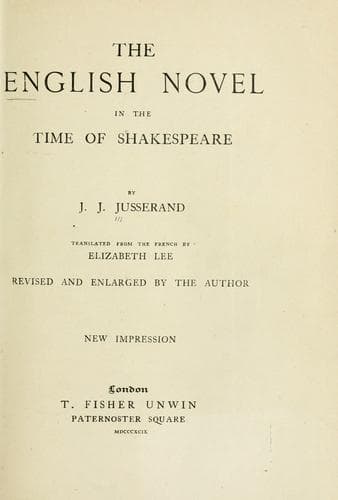
The English Novel in the Time of ShakespeareJusserand, J. J. (Jean Jules)
History
The English Novel in the Time of Shakespeare
Jusserand, J. J. (Jean Jules)
English fiction -- Early modern, 1500-1700 -- History and criticism
"O vertue," she cries, in her torment, "where doest thou hide thy selfe?
What hideous thing is this which doth eclipse thee? or is it true that
thou wert never but a vaine name, and no essentiall thing; which hast
thus left thy professed servant, when she had most neede of thy lovely
presence? O imperfect proportion of reason, which can too much foresee,
and too little prevent: Alas, alas, said she, if there were but one hope
for all my paines, or but one excuse for all my faultinesse! But wretch
that I am, my torment is beyond all succour, and my evill deserving doth
exceed my evill fortune. For nothing else did my husband take this
strange resolution to live so solitarily: for nothing else have the
winds delivered this strange guest to my countrey: for nothing else have
the destinies reserved my life to this time, but that onely I, most
wretched I, should become a plague to my selfe and a shame to
woman-kind. Yet if my desire, how unjust soever it be, might take
effect, though a thousand deaths followed it, and every death were
followed with a thousand shames, yet should not my sepulchre receive me
without some contentment. But, alas, so sure I am, that Zelmane is such
as can answer my love; yet as sure I am, that this disguising must needs
come for some foretaken conceit: and then, wretched Gynecia, where canst
thou find any small ground plot for hope to dwell upon? No, no, it is
Philoclea his heart is set upon, it is my daughter I have borne to
supplant me: but if it be so, the life I have given thee, ungratefull
Philoclea, I will sooner with these hands bereave thee of, than my
birth shall glory she hath bereaved me of my desires."[205]
We see with how little reason the "Arcadia" is sometimes placed in the
category of bedizened pastorals, where the reader is reduced to regret
the absence of a "little wolf," and whether Gynecia, in spite of the
oblivion which has gathered over her, does not deserve a place by the
side of the passionate heroines of Marlowe and Webster rather than in a
gallery of Lancret-like characters.
Public-domain text, read in full here on John Shaqi.
Reviews
Reviews
No reviews yet
Be the first to share your thoughts on this work.
Elsewhere in the archive
Join the Discussion
Join the discussion
Sign in to leave a comment or review.
Sign InorCreate an account