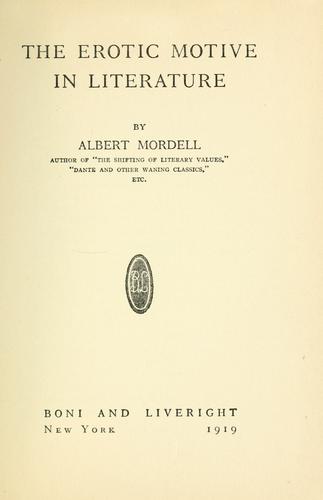
Erotic literature -- History and criticism; Psychoanalysis and literature; Sex in literature
His affair with Harriet Grove was not the ephemeral thing that William
Sharp deems it, in his biography of the poet. For even when married to
Harriet Westbrook, he was still chagrined about the first Harriet. When
Miss Grove married a cousin in the fall of 1811, a few months after his
own marriage, the poet wrote to her brother, asking how he liked his
brother-in-law, and added sarcastically and bitterly, "A new brother
as well as a new cousin must be an invaluable acquisition." This was
in October 28, 1811. Harriet Grove's conduct had caused him to spend
many sleepless nights, and only a few months before his marriage to
Miss Westbrook he had suicidal thoughts. He wrote sad love verses and
a complaint against love's perfidy. Captain Kennedy describes Shelley,
in June, 1813, as playing on the piano a favourite tune which Harriet
Grove used to play for him. (Dowden's _Life of Shelley_, p. 390.) It
was in the next year that he sketched the poem, _Julian and Maddalo_,
and while it is likely that in the final version, which was written
four years later though published after his death, unconscious emotions
regarding Harriet Westbrook were fused into the poem along with the
indignation at Harriet Grove. The reference to the tomb for which the
lady addressed in the poem deserted the poet, may have been suggested
by the dead Harriet Westbrook; but this fact is not sufficient reason
for regarding her the subject of the poem, as Miss Shore and Mr. Salt
do. We should look for truth beyond such incidental references. The
pain in this poem is the memory of a far greater and earlier agony than
that Shelley experienced by Harriet Westbrook's infidelity; rather of
the grief that Harriet Grove caused him. The passages in the letters to
Hogg prove that the poet's sorrow was too keen for him to forget; he
could not help but put them unconsciously in this poem.
There are references to Harriet Grove in _Epipsychidion_ written in
the early winter of 1821. Mr. Flea, in an article on _The Story of
Shelley's Life in Epipsychidion_, contends correctly that Harriet Grove
is the "one with the voice which was envenomed melody," from whose
cheeks flew a killing air which lay upon the leaves of the poet's heart
and made him feel the ruins of age. The bitterness of this passage is
equal to that in _Julian and Maddalo_, and hence the lines do not refer
to some vulgar affair as some critics think.
Shelley had written some of his earliest sad and lugubrious love poems
to Harriet Grove, and they appeared in 1810, in the volume _Victor and
Cazir_, a copy of which book the poet presented to Harriet Grove. In
the November of the same year, when he was losing her, he published
_Posthumous fragments of Margaret Nicholson_, and the concluding poem,
"Melody to a Scene of Former Times," has all the pain of the Maniac's
soliloquy in _Julian and Maddalo_, and was, no doubt, written to
Harriet Grove. It has passages of reproach like those in that poem.
Public-domain text, read in full here on John Shaqi.
Reviews
Reviews
No reviews yet
Be the first to share your thoughts on this work.
Elsewhere in the archive
Join the Discussion
Join the discussion
Sign in to leave a comment or review.
Sign InorCreate an account