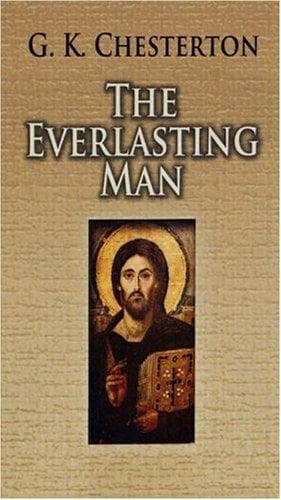
The Everlasting ManChesterton, G. K. (Gilbert Keith)
Religion
The Everlasting Man
Chesterton, G. K. (Gilbert Keith)
Catholic Church -- Apologetic works; Christianity and other religions; Religion
Hannibal marched down the road to Rome, and the Romans who rushed to war
with him felt as if they were fighting with a magician. Two great armies
sank to right and left of him into the swamps of the Trebia; more and
more were sucked into the horrible whirlpool of Cannae; more and more
went forth only to fall in ruin at his touch. The supreme sign of all
disasters, which is treason, turned tribe after tribe against the
falling cause of Rome, and still the unconquerable enemy rolled nearer
and nearer to the city; and following their great leader the swelling
cosmopolitan army of Carthage passed like a pageant of the whole world;
the elephants shaking the earth like marching mountains and the gigantic
Gauls with their barbaric panoply and the dark Spaniards girt in gold
and the brown Numidians on their unbridled desert horses wheeling and
darting like hawks, and whole mobs of deserters and mercenaries and
miscellaneous peoples; and the Grace of Baal went before them.
The Roman augurs and scribes who said in that hour that it brought forth
unearthly prodigies, that a child was born with the head of an elephant
or that stars fell down like hailstones, had a far more philosophical
grasp of what had really happened than the modern historian who can see
nothing in it but a success of strategy concluding a rivalry in
commerce. Something far different was felt at the time and on the spot,
as it is always felt by those who experience a foreign atmosphere
entering their own like a fog or a foul savour. It was no mere military
defeat, it was certainly no mere mercantile rivalry, that filled the
Roman imagination with such hideous omens of nature herself becoming
unnatural. It was Moloch upon the mountain of the Latins, looking with
his appalling face across the plain; it was Baal who trampled the
vineyards with his feet of stone; it was the voice of Tanit the
invisible, behind her trailing veils, whispering of the love that is
more horrible than hate. The burning of the Italian cornfields, the ruin
of the Italian vines, were something more than actual; they were
allegorical. They were the destruction of domestic and fruitful things,
the withering of what was human before that inhumanity that is far
beyond the human thing called cruelty. The household gods bowed low in
darkness under their lowly roofs; and above them went the demons upon a
wind from beyond all walls, blowing the trumpet of the Tramontane. The
door of the Alps was broken down; and in no vulgar but a very solemn
sense, it was Hell let loose. The war of the gods and demons seemed
already to have ended; and the gods were dead. The eagles were lost, the
legions were broken; and in Rome nothing remained but honour and the
cold courage of despair.
Public-domain text, read in full here on John Shaqi.
Reviews
Reviews
No reviews yet
Be the first to share your thoughts on this work.
Elsewhere in the archive
Join the Discussion
Join the discussion
Sign in to leave a comment or review.
Sign InorCreate an account