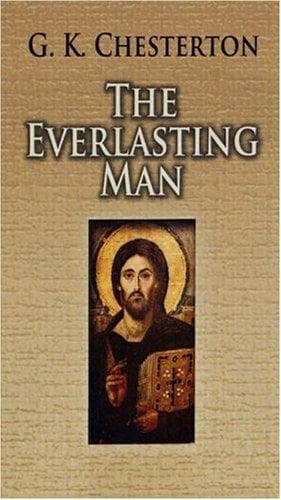
The Everlasting ManChesterton, G. K. (Gilbert Keith)
Religion
The Everlasting Man
Chesterton, G. K. (Gilbert Keith)
Catholic Church -- Apologetic works; Christianity and other religions; Religion
It is still a strange story, though an old one, how they came out of
orient lands, crowned with the majesty of kings and clothed with
something of the mystery of magicians. That truth that is tradition has
wisely remembered them almost as unknown quantities, as mysterious as
their mysterious and melodious names: Melchior, Caspar, Balthazar. But
there came with them all that world of wisdom that had watched the stars
in Chaldea and the sun in Persia; and we shall not be wrong if we see in
them the same curiosity that moves all the sages. They would stand for
the same human ideal if their names had really been Confucius or
Pythagoras or Plato. They were those who sought not tales but the truth
of things; and since their thirst for truth was itself a thirst for God,
they also have had their reward. But even in order to understand that
reward, we must understand that for philosophy as much as mythology,
that reward was the completion of the incomplete.
Such learned men would doubtless have come, as these learned men did
come, to find themselves confirmed in much that was true in their own
traditions and right in their own reasoning. Confucius would have found
a new foundation for the family in the very reversal of the Holy Family;
Buddha would have looked upon a new renunciation, of stars rather than
jewels and divinity than royalty. These learned men would still have the
right to say, or rather a new right to say, that there was truth in
their old teaching. But, after all, these learned men would have come to
learn. They would have come to complete their conceptions with something
they had not yet conceived; even to balance their imperfect universe
with something they might once have contradicted. Buddha would have come
from his impersonal paradise to worship a person. Confucius would have
come from his temples of ancestor-worship to worship a child.
Public-domain text, read in full here on John Shaqi.
Reviews
Reviews
No reviews yet
Be the first to share your thoughts on this work.
Elsewhere in the archive
Join the Discussion
Join the discussion
Sign in to leave a comment or review.
Sign InorCreate an account