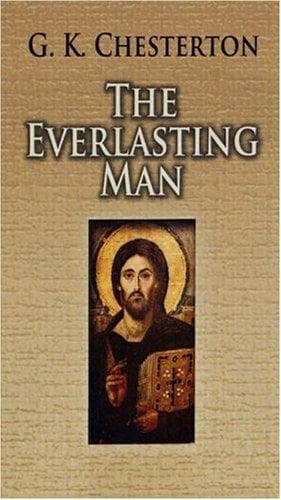
The Everlasting ManChesterton, G. K. (Gilbert Keith)
Religion
The Everlasting Man
Chesterton, G. K. (Gilbert Keith)
Catholic Church -- Apologetic works; Christianity and other religions; Religion
And as it was with these powers that were good, or at least had once
been good, so it was with the element which was perhaps the best, or
which Christ himself seems certainly to have felt as the best. The poor
to whom he preached the good news, the common people who heard him
gladly, the populace that had made so many popular heroes and demigods
in the old pagan world, showed also the weaknesses that were dissolving
the world. They suffered the evils often seen in the mob of the city,
and especially the mob of the capital, during the decline of a society.
The same thing that makes the rural population live on tradition makes
the urban population live on rumour. Just as its myths at the best had
been irrational, so its likes and dislikes are easily changed by
baseless assertion that is arbitrary without being authoritative. Some
brigand or other was artificially turned into a picturesque and popular
figure and run as a kind of candidate against Christ. In all this we
recognise the urban population that we know, with its newspaper scares
and scoops. But there was present in this ancient population an evil
more peculiar to the ancient world. We have noted it already as the
neglect of the individual, even of the individual voting the
condemnation and still more of the individual condemned. It was the soul
of the hive; a heathen thing. The cry of this spirit also was heard in
that hour, ‘It is well that one man die for the people.’ Yet this spirit
in antiquity of devotion to the city and to the state had also been in
itself and in its time a noble spirit. It had its poets and its
martyrs; men still to be honoured for ever. It was failing through its
weakness in not seeing the separate soul of a man, the shrine of all
mysticism; but it was only failing as everything else was failing. The
mob went along with the Sadducees and the Pharisees, the philosophers
and the moralists. It went along with the imperial magistrates and the
sacred priests, the scribes and the soldiers, that the one universal
human spirit might suffer a universal condemnation; that there might be
one deep, unanimous chorus of approval and harmony when Man was rejected
of men.
Public-domain text, read in full here on John Shaqi.
Reviews
Reviews
No reviews yet
Be the first to share your thoughts on this work.
Elsewhere in the archive
Join the Discussion
Join the discussion
Sign in to leave a comment or review.
Sign InorCreate an account