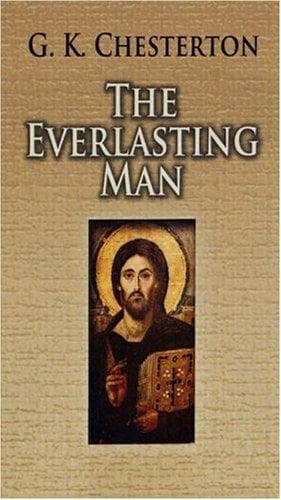
The Everlasting ManChesterton, G. K. (Gilbert Keith)
Religion
The Everlasting Man
Chesterton, G. K. (Gilbert Keith)
Catholic Church -- Apologetic works; Christianity and other religions; Religion
So might rise from their graves the great heresiarchs to confound their
comrades of to-day. There is nothing that the critics now affirm that we
cannot call on these great witnesses to deny. The modern critic will say
lightly enough that Christianity was but a reaction into asceticism and
anti-natural spirituality, a dance of fakirs furious against life and
love. But Manes the great mystic will answer them from his secret throne
and cry, ‘These Christians have no right to be called spiritual; these
Christians have no title to be called ascetics; they who compromised
with the curse of life and all the filth of the family. Through them the
earth is still foul with fruit and harvest and polluted with population.
Theirs was no movement against nature, or my children would have carried
it to triumph; but these fools renewed the world when I would have ended
it with a gesture.’ And another critic will write that the Church was
but the shadow of the Empire, the fad of a chance Emperor, and that it
remains in Europe only as the ghost of the power of Rome. And Arius the
deacon will answer out of the darkness of oblivion: ‘No, indeed, or the
world would have followed my more reasonable religion. For mine went
down before demagogues and men defying Caesar; and around my champion
was the purple cloak and mine was the glory of the eagles. It was not
for lack of these things that I failed.’ And yet a third modern will
maintain that the creed spread only as a sort of panic of hell-fire; men
everywhere attempting impossible things in fleeing from incredible
vengeance; a nightmare of imaginary remorse; and such an explanation
will satisfy many who see something dreadful in the doctrine of
orthodoxy. And then there will go up against it the terrible voice of
Tertullian, saying, ‘And why then was I cast out; and why did soft
hearts and heads decide against me when I proclaimed the perdition of
all sinners; and what was this power that thwarted me when I threatened
all backsliders with hell? For none ever went up that hard road so far
as I; and mine was the _Credo Quia Impossibile_.’ Then there is the
fourth suggestion that there was something of the Semitic secret society
in the whole matter; that it was a new invasion of the nomad spirit
shaking a kindlier and more comfortable paganism, its cities and its
household gods; whereby the jealous monotheistic races could after all
establish their jealous God. And Mahomet shall answer out of the
whirlwind, the red whirlwind of the desert, ‘Who ever served the
jealousy of God as I did or left him more lonely in the sky? Who ever
paid more honour to Moses and Abraham or won more victories over idols
and the images of paganism? And what was this thing that thrust me back
with the energy of a thing alive; whose fanaticism could drive me from
Sicily and tear up my deep roots out of the rock of Spain? What faith
was theirs who thronged in thousands of every class and country crying
Public-domain text, read in full here on John Shaqi.
Reviews
Reviews
No reviews yet
Be the first to share your thoughts on this work.
Elsewhere in the archive
Join the Discussion
Join the discussion
Sign in to leave a comment or review.
Sign InorCreate an account