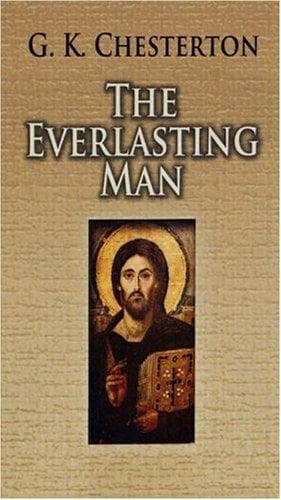
The Everlasting ManChesterton, G. K. (Gilbert Keith)
Religion
The Everlasting Man
Chesterton, G. K. (Gilbert Keith)
Catholic Church -- Apologetic works; Christianity and other religions; Religion
When that southern culture spread to the north-west it
produced many very wonderful things; of which doubtless we ourselves are
the most wonderful. When it spread thence to colonies and new countries,
it was still the same culture so long as it was culture at all. But
round that little sea like a lake were the things themselves, apart from
all extensions and echoes and commentaries on the things; the Republic
and the Church; the Bible and the heroic epics; Islam and Israel and the
memories of the lost empires; Aristotle and the measure of all things.
It is because the first light upon _this_ world is really light, the
daylight in which we are still walking to-day, and not merely the
doubtful visitation of strange stars, that I have begun here with noting
where that light first falls on the towered cities of the eastern
Mediterranean.
But though Babylon and Egypt have thus a sort of first claim, in the
very fact of being familiar and traditional, fascinating riddles to us
but also fascinating riddles to our fathers, we must not imagine that
they were the only old civilisations on the southern sea; or that all
the civilisation was merely Sumerian or Semitic or Coptic, still less
merely Asiatic or African. Real research is more and more exalting the
ancient civilisation of Europe and especially of what we may still
vaguely call the Greeks. It must be understood in the sense that there
were Greeks before the Greeks, as in so many of their mythologies there
were gods before the gods. The island of Crete was the centre of the
civilisation now called Minoan, after the Minos who lingered in ancient
legend and whose labyrinth was actually discovered by modern archeology.
This elaborate European society, with its harbours and its drainage and
its domestic machinery, seems to have gone down before some invasion of
its northern neighbours, who made or inherited the Hellas we know in
history. But that earlier period did not pass till it had given to the
world gifts so great that the world has ever since been striving in vain
to repay them, if only by plagiarism.
Public-domain text, read in full here on John Shaqi.
Reviews
Reviews
No reviews yet
Be the first to share your thoughts on this work.
Elsewhere in the archive
Join the Discussion
Join the discussion
Sign in to leave a comment or review.
Sign InorCreate an account