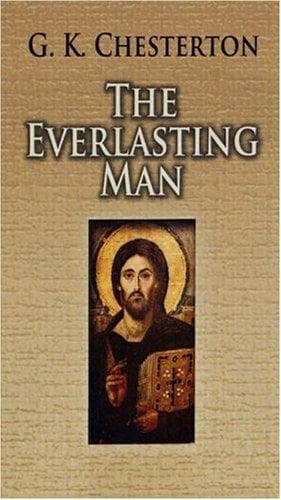
The Everlasting ManChesterton, G. K. (Gilbert Keith)
Religion
The Everlasting Man
Chesterton, G. K. (Gilbert Keith)
Catholic Church -- Apologetic works; Christianity and other religions; Religion
Comparative religion is very comparative indeed. That is, it is so much
a matter of degree and distance and difference that it is only
comparatively successful when it tries to compare. When we come to look
at it closely we find it comparing things that are really quite
incomparable. We are accustomed to see a table or catalogue of the
world’s great religions in parallel columns, until we fancy they are
really parallel. We are accustomed to see the names of the great
religious founders all in a row: Christ; Mahomet; Buddha; Confucius. But
in truth this is only a trick; another of these optical illusions by
which any objects may be put into a particular relation by shifting to a
particular point of sight. Those religions and religious founders, or
rather those whom we choose to lump together as religions and religious
founders, do not really show any common character. The illusion is
partly produced by Islam coming immediately after Christianity in the
list; as Islam did come after Christianity and was largely an imitation
of Christianity. But the other eastern religions, or what we call
religions, not only do not resemble the Church but do not resemble each
other. When we come to Confucianism at the end of the list, we come to
something in a totally different world of thought. To compare the
Christian and Confucian religions is like comparing a theist with an
English squire or asking whether a man is a believer in immortality or a
hundred-per-cent American. Confucianism may be a civilisation but it is
not a religion.
Public-domain text, read in full here on John Shaqi.
Reviews
Reviews
No reviews yet
Be the first to share your thoughts on this work.
Elsewhere in the archive
Join the Discussion
Join the discussion
Sign in to leave a comment or review.
Sign InorCreate an account