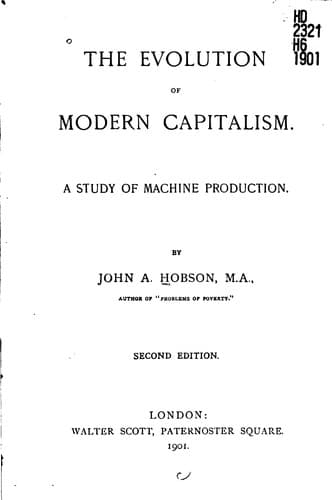
The Evolution of Modern Capitalism: A Study of Machine ProductionHobson, J. A. (John Atkinson)
History
The Evolution of Modern Capitalism: A Study of Machine Production
Hobson, J. A. (John Atkinson)
Capitalism; Industries -- History; Machinery in the workplace
The relationship is sometimes one of divergency or competition of
trades. Where the same service may be supplied by two or more
different commodities the trades are related by direct competition.
Oil, gas, electricity, as illuminants, are a familiar example of this
relationship. Many trades which produce commodities that are similar,
but far from identical in character, feel this relationship very
closely. The competition between various kinds of food, which with
different kinds and degrees of satisfaction may produce the same
substantial effects, between fish and meat, between various kinds of
vegetables and drinks, enables us to realise something of the
intricacy of the relations of this kind. In clothing we have
antagonism of interests between the various fabrics which has led to
great industrial changes. The most signal example is the rise of
cotton, its triumph over woollen clothes by the earlier application of
the new machinery, and over silk by the early superiority of its
dyeing and printing processes.[115] So in recent years in the conflict
among beverages, tea, and in a less measure cocoa, have materially
damaged the growth of the coffee industry so far as English
consumption is concerned. Where such rivalry exists, an industry may
be as powerfully and immediately affected by a force which raises or
depresses its competitor as by a force which directly affects itself.
§ 9. The growth of numerous and strongly-built structural attachments
between different trades and markets related to different localities
implies the existence of a large system of channels of communication
throughout our industrial society. By the increased number and
complexity of these channels connecting different markets and
businesses, and relating the most distant classes of consumers, we can
measure the evolution of the industrial organism. Through these
channels flow the currents of modern industrial life, whose pace,
length, and regularity contrast with the feeble, short, and spasmodic
flow of commerce in earlier times. This advance in functional activity
of distribution is thus expressed by Mr. Spencer:--"In early English
times the great fairs, annual and other, formed the chief means of
distribution, and remained important down to the seventeenth century,
when not only villages, but even small towns, devoid of shops, were
irregularly supplied by hawkers who had obtained their stocks at these
gatherings. Along with increased population, larger industrial
centres, and improved channels of communication, local supply became
easier; and so frequent markets more and more fulfilled the purpose
of infrequent fairs. Afterwards, in chief places and for chief
commodities, markets themselves multiplied, becoming in some cases
daily. Finally came a constant distribution, such that of some foods
there is to each town an influx every morning; and of milk even more
than once in the day. The transition from times when the movements of
Public-domain text, read in full here on John Shaqi.
Reviews
Reviews
No reviews yet
Be the first to share your thoughts on this work.
Elsewhere in the archive
Join the Discussion
Join the discussion
Sign in to leave a comment or review.
Sign InorCreate an account